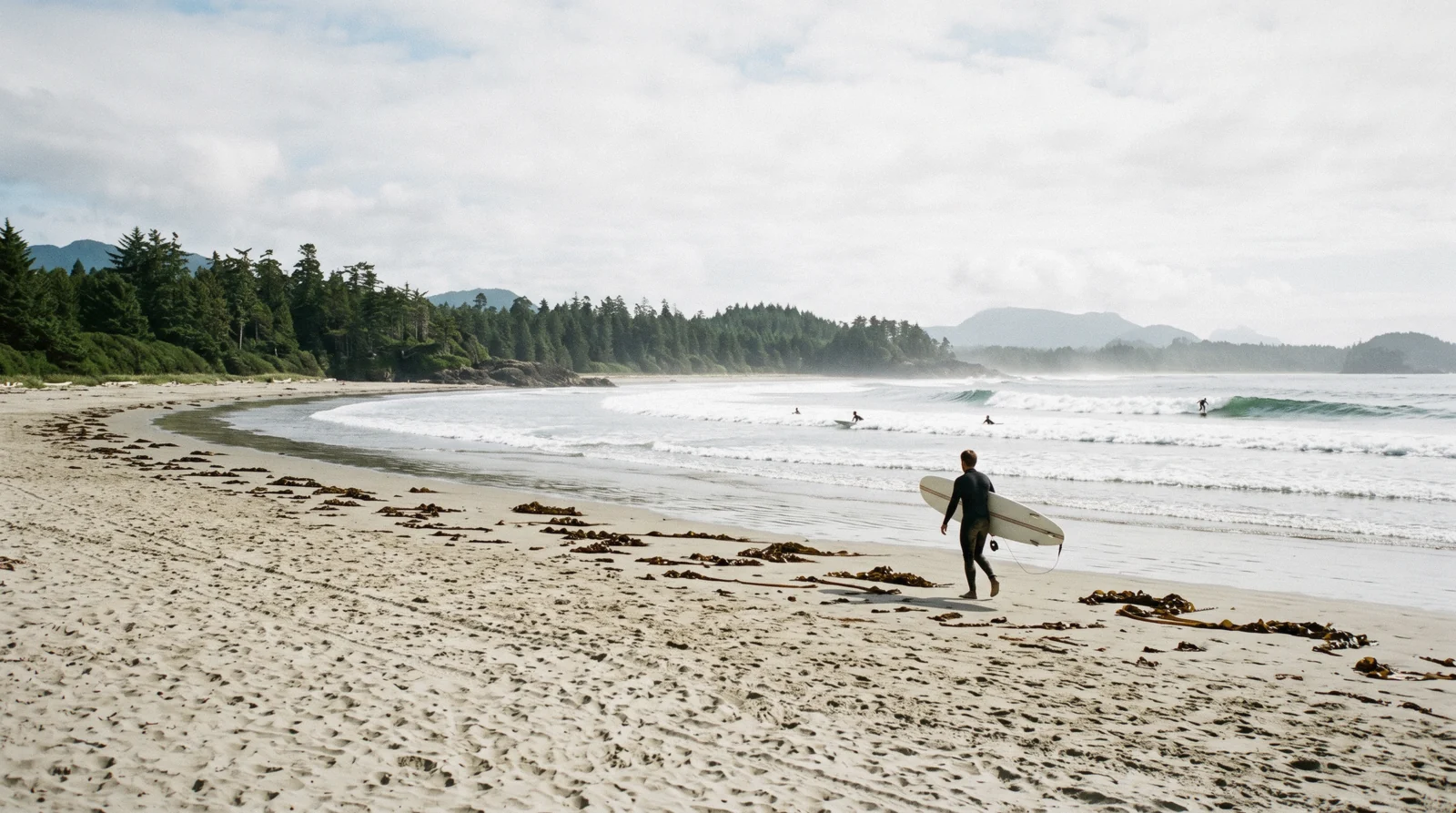
Two surfers carrying boards across the wet sand of Chesterman Beach at sunset in Tofino, British Columbia, with the spruce-covered Frank Island behind them
Tofino, BC: An Independent Guide to the End of the Road
Tofino is a town of about 2,500 people at the end of Highway 4 in British Columbia, on a peninsula between the open Pacific and Clayoquot Sound. The trip splits by water: the beaches and the national park you reach by road, and the hot springs, Meares Island, the whales and the bears you reach only by boat or floatplane. This guide settles which beaches need a park pass, what the boats cost, when the whales and the storms come, and where to eat and sleep.
Quick answerHow many days, what it costs, which beach, where to sleep
A day in Pacific Rim National Park's Long Beach Unit costs US$8.69 (C$12.25) per adult, the town beaches are free, and Hot Springs Cove is reached only by boat or floatplane. Tofino itself is a town of about 2,500 at the end of Highway 4 in British Columbia, not an island of its own. Two full days cover the beaches, the Rainforest Trail and one boat trip. A third day goes to Ucluelet or a second boat. It rains about 3,271 mm a year, mostly from October to March, so the season decides the trip more than the days do.
No beach here has had lifeguards since 2012, so swim and surf on the understanding that every beach is unsupervised. Read the safety and rip current notes before you get in.
The park pass logic is simple: Long Beach sits inside Pacific Rim National Park Reserve and needs a pass per adult, while Chesterman Beach sits outside it and costs nothing. Full rules on the park pass page.
Tofino in Six Decisions
Almost every planning question here resolves into one of six choices, and each choice has its own page.
Pick between road stops and boat stops before you pick anything else, because boats book out first.
Long Beach is the park's main sand, about 16 km of it, reached with a day pass per adult.
The Rainforest Trail gives you old-growth forest in two 1 km loops, one on each side of the highway.
The Naa'Waya'Sum gardens, the former Tofino Botanical Gardens, sell a US$7.10 (C$10) day pass, but the operator lists them closed for the season with no reopening date.
Tofino sits at the tip of the Esowista Peninsula on the west coast of Vancouver Island, and everything reachable by road falls into a handful of areas. The rest of the region, the islands and coves of Clayoquot Sound, starts at the harbour docks and nothing more.
The village is small enough to walk end to end. The shops and restaurants sit a few streets from the harbour, and the harbour at the bottom of the hill is where every boat tour checks in. Tofino was incorporated as a village in 1932 and became a district municipality in 1982, and the 2021 census counted 2,516 residents, up 27.9% from 2016. The name came from Tofino Inlet, which Spanish officers Galiano and Valdés named in 1792 for Admiral Vicente Tofiño, a Spanish navy hydrographer. Use the map of Tofino to get your bearings before you arrive.
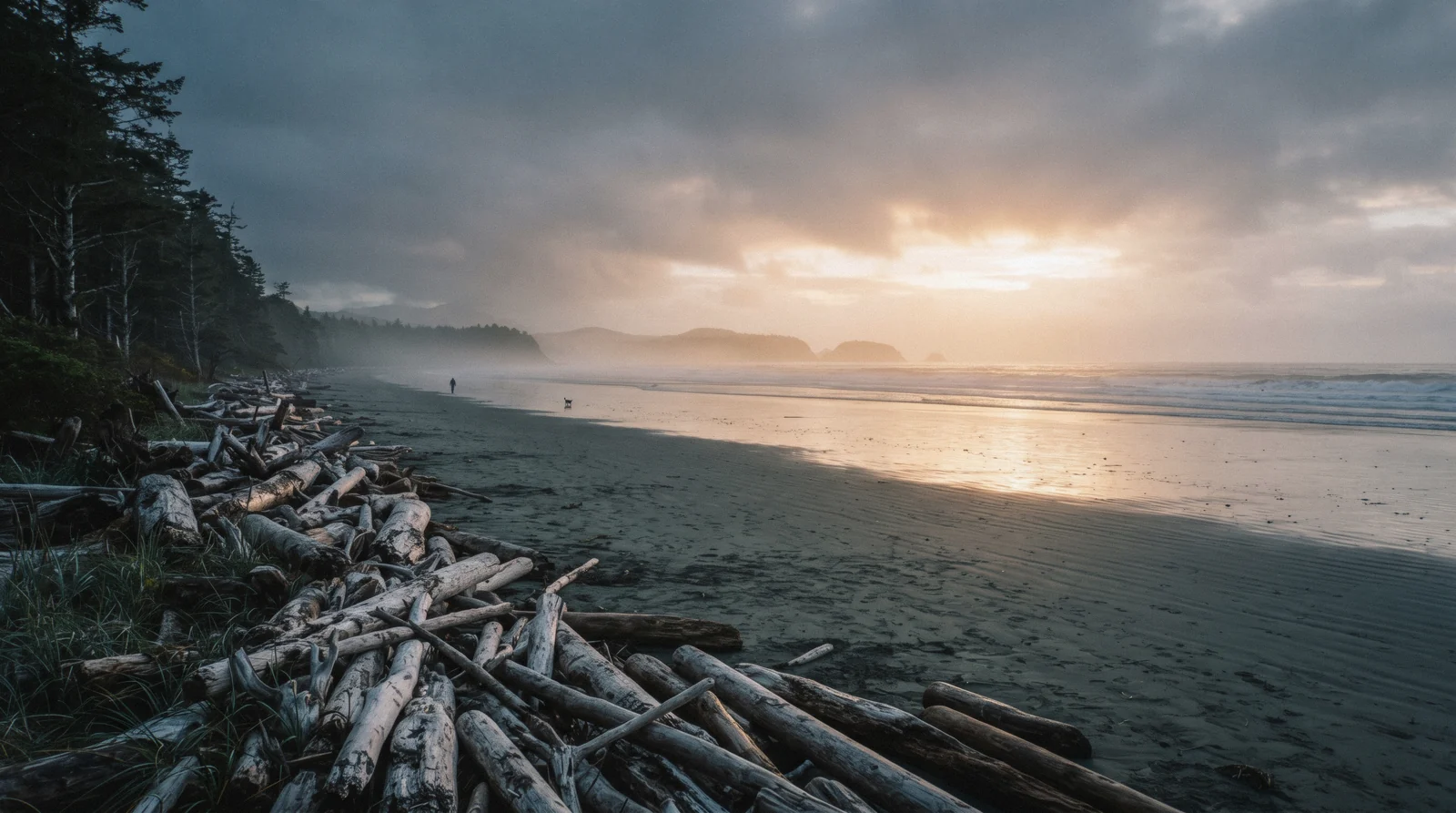
The surf beaches run along the road south of the village, and none of them sit inside the national park, so no pass is needed. Chesterman Beach is the closest big sand to town, Mackenzie Beach sits between them, and Cox Bay is the main surf beach where the schools teach. Every one of these beaches is unsupervised, because no beach in the area has had lifeguards since 2012. Tides set the day here, since low tide opens the widest sand and the best walking. Compare them all on Tofino beaches.
Chesterman Beach is the choice for a long low-tide walk toward Frank Island.
Cox Bay is where the surf crowd goes, and where a surf report is worth reading before you pack the board.
Pacific Rim National Park Reserve has three units, and the Long Beach Unit is the one you drive to, on the highway between Tofino and Ucluelet. The beach runs about 16 km, which makes it one of the longest continuous sand beaches on the island's west coast. Entry is a daily fee per adult, paid for the vehicle's occupants at the Long Beach Unit lots, and Parks Canada publishes no cap on the number of parking spaces. Its advice is general: arrive early. The Kwisitis Visitor Centre at Wickaninnish Beach opens daily 9:30-16:30 in the autumn season, and winter hours are not yet published, so check before you go. Details on the national park.
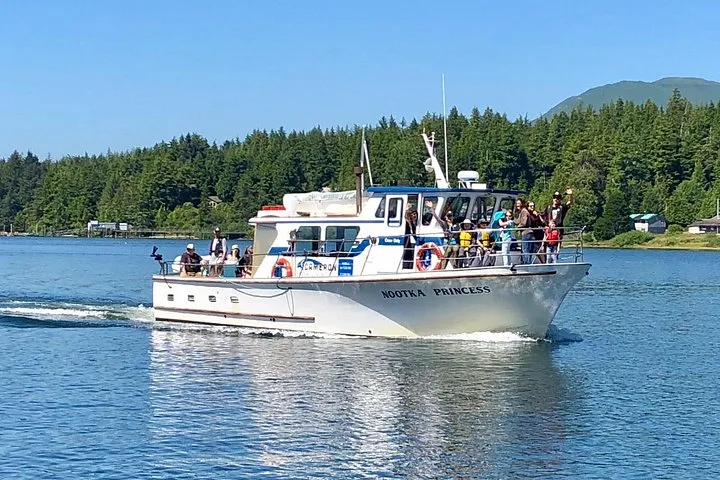
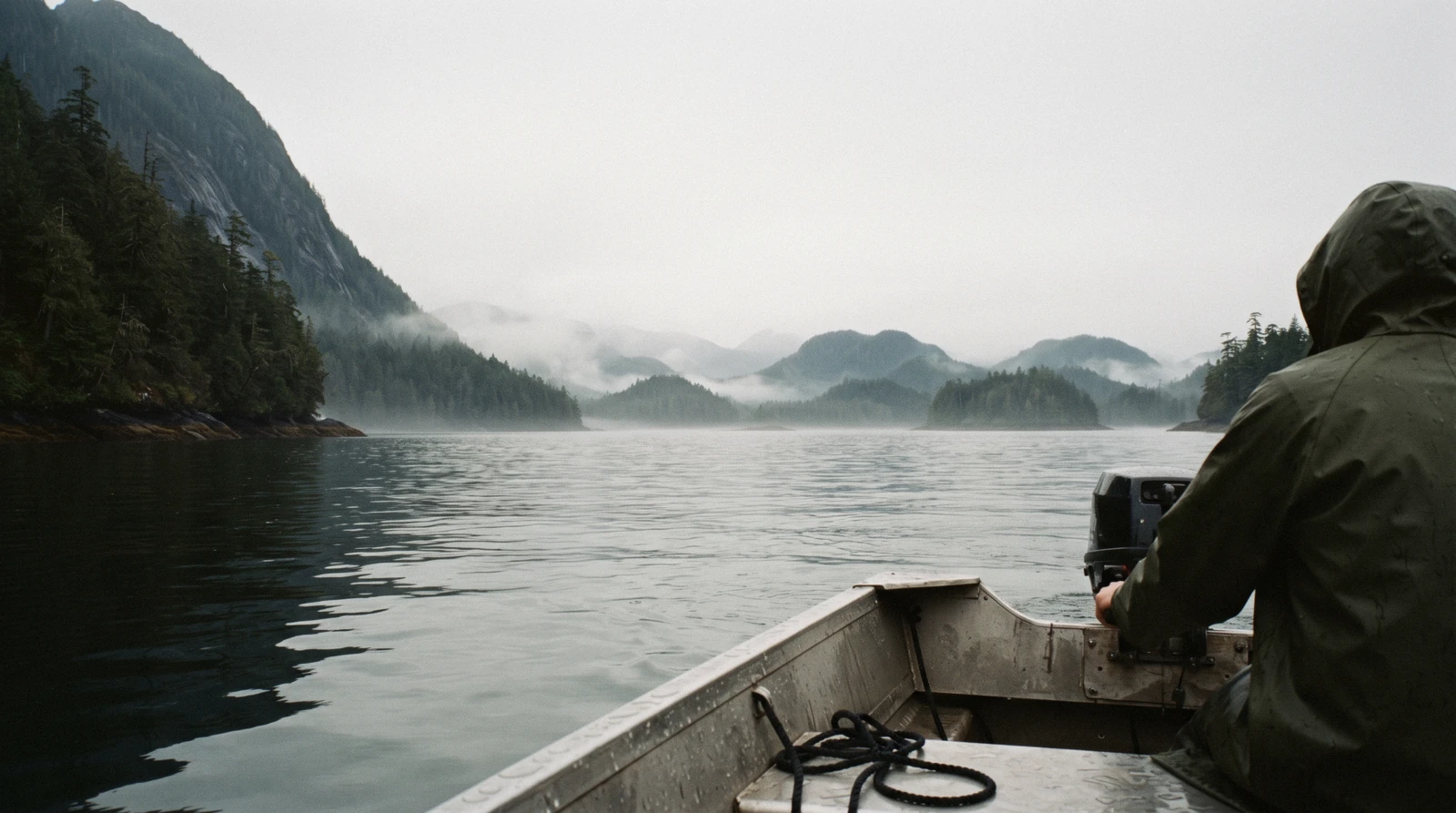
Clayoquot Sound is the water half of the trip, shared by the Tla-o-qui-aht, Ahousaht and Hesquiaht First Nations, and a UNESCO biosphere region since February 2000, the seventh in Canada. Everything on this side needs a boat or a floatplane, which is why the harbour is the busiest place in town in the morning. The sound holds the bears, most of the whales, the kayaking channels and the roadless villages. Pick your boat on Clayoquot Sound and book it before the beach days, because boats run on tides and weather and fill in summer.
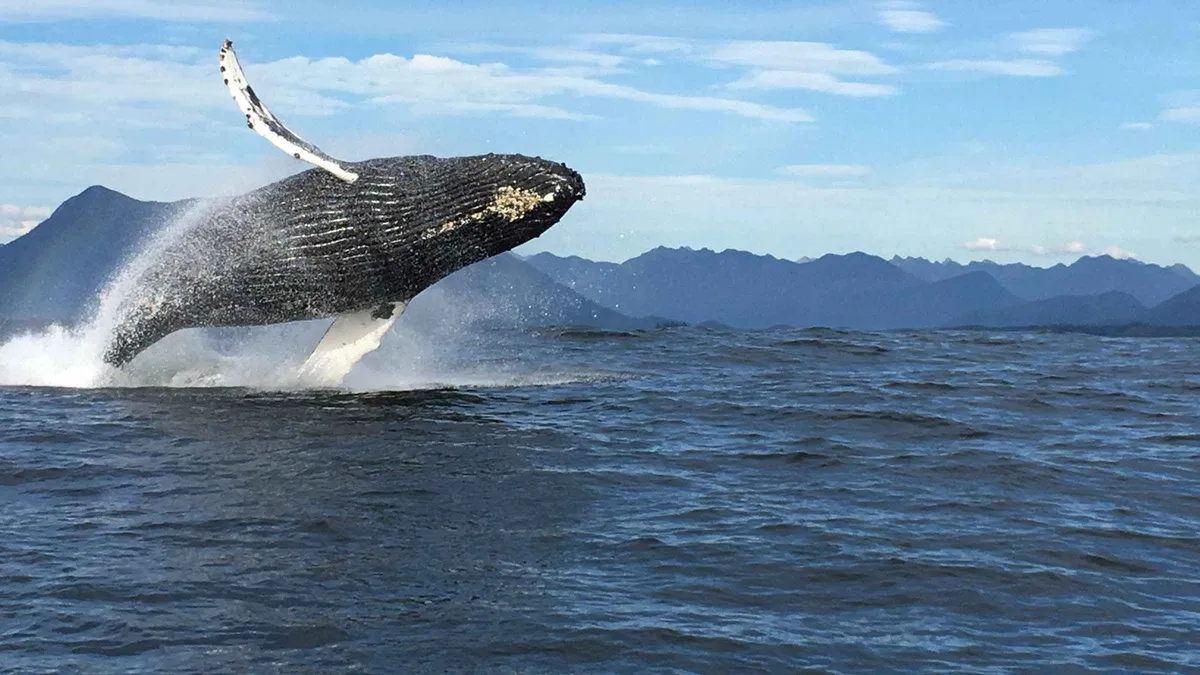
Whale watching works from late February to May for the migration, and all year for the resident group.
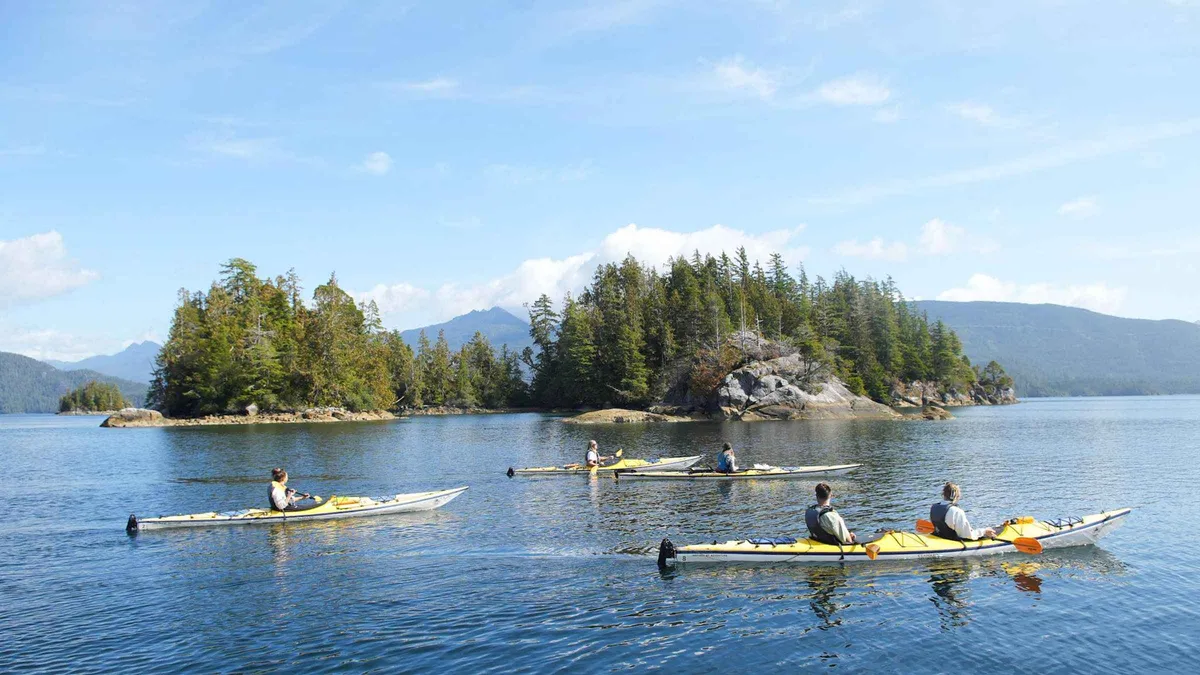
Kayaking uses the sheltered channels that big open-water boats skip.
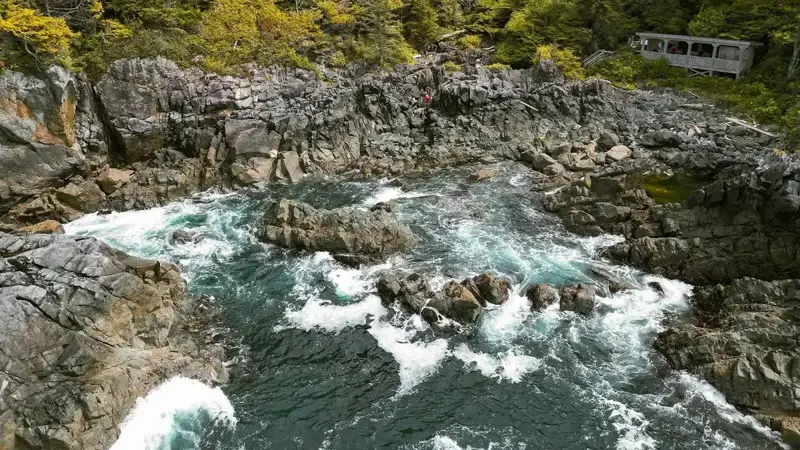
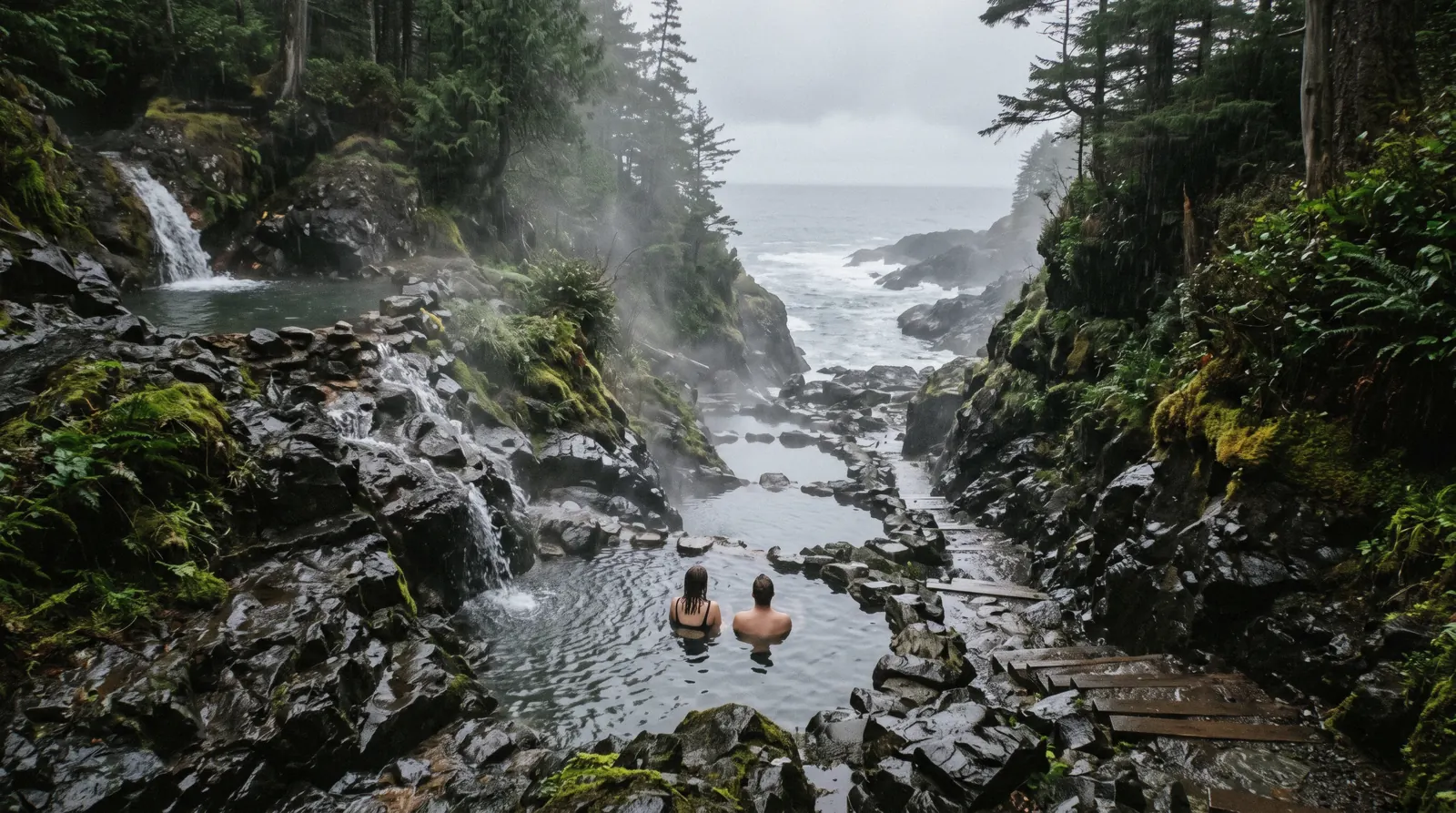
Hot Springs Cove is the classic full-day boat trip, about 6 hours out and back on a covered boat, in the park BC Parks renamed Nism̓aakqin Park in 2025. It was formerly Maquinna Marine Provincial Park, and most older signs and searches still use that name. There is no road access, no bridge and no entry fee from BC Parks, so the whole cost is the transport. From the dock, a boardwalk through old-growth forest takes about half an hour each way down to pools that cascade along the rock face, cooling as they meet the sea. The rocks are slippery, so bring shoes you can wet. Read the full plan on Hot Springs Cove.
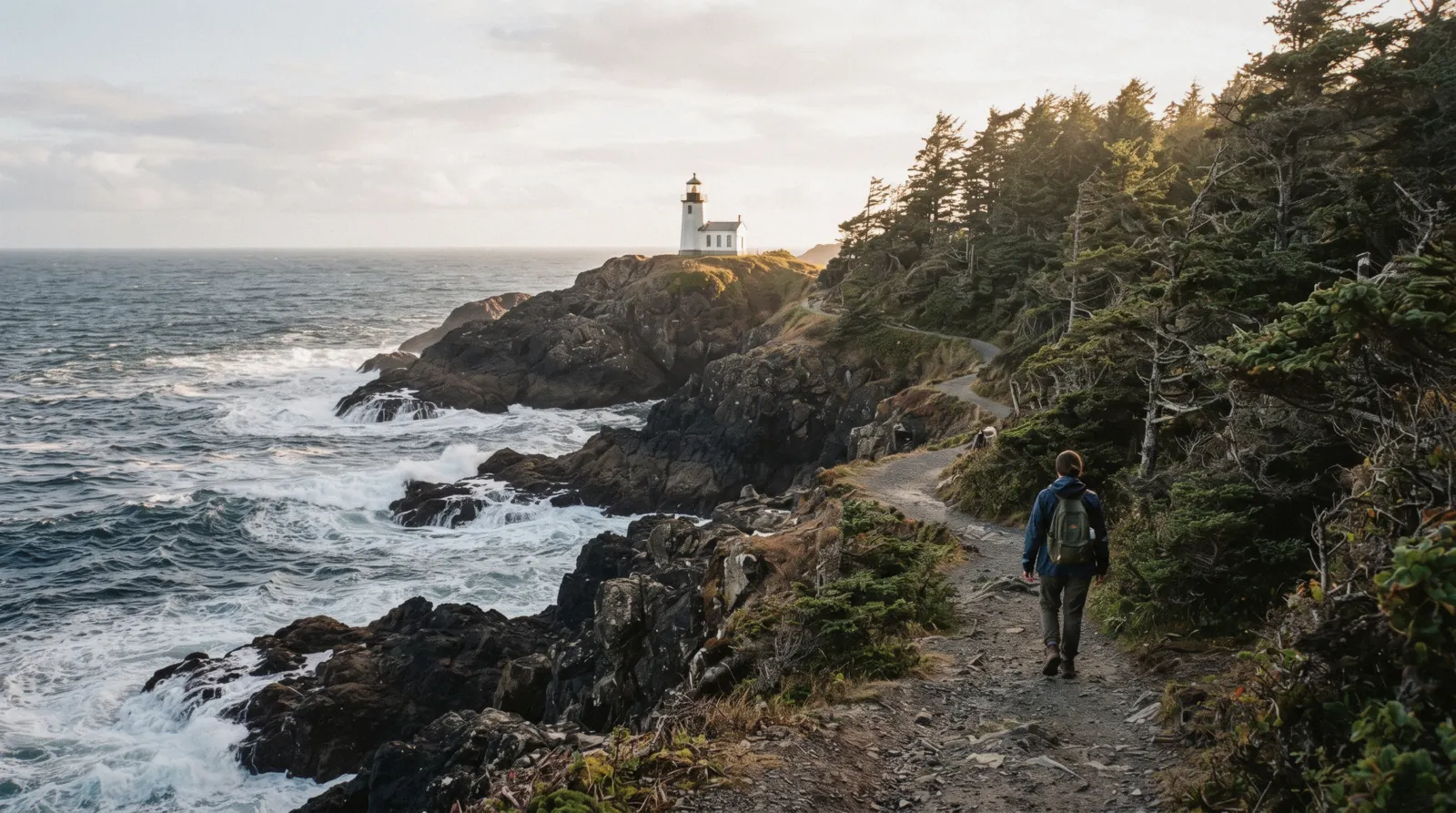
Ucluelet is the other town on this coast, 40-42 km south of Tofino, about 30-40 minutes by car along the highway that runs through the park. It has a working harbour, a small walkable centre and the Wild Pacific Trail, a free path along the cliffs with a 2.5 km Lighthouse Loop past Amphitrite Lighthouse. The Ucluelet Aquarium, Canada's first catch-and-release aquarium, opens daily from March 1 to November 30, 10:00-16:30. Many visitors give Ucluelet its own half day or pair it with the drive south. See the Ucluelet page for the split.
The Ucluelet Aquarium is US$12.78 (C$18) for an adult and releases its animals back to the sound at season's end.
40 km south
What to See First, From Long Beach to the Harbour
Six stops cover the best of a first visit, four of them by road and two by boat. The full list of things to do in Tofino adds the rest once you have these down.
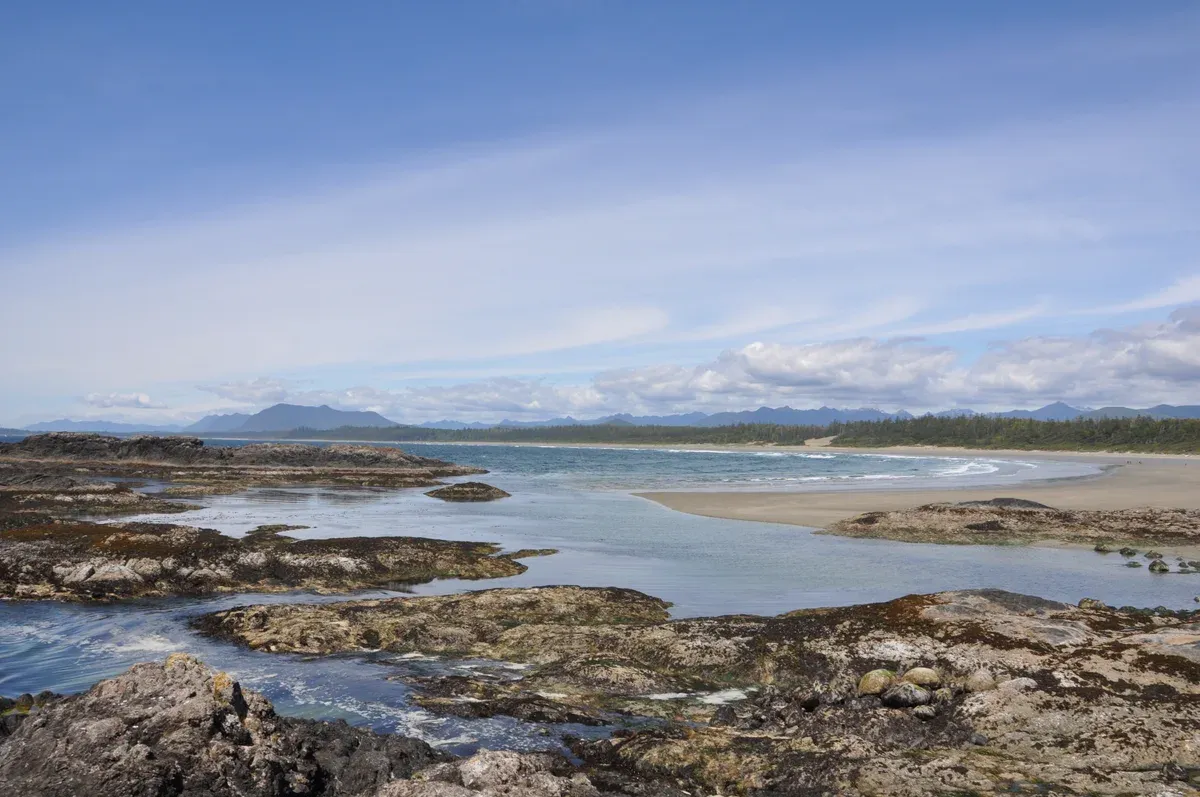
Long Beach in the Long Beach Unit of the park. Photo: EcaterinaLitvin, CC BY-SA 4.0, via Wikimedia Commons
Long Beach and the Kwisitis Visitor Centre
Long Beach is the headline of Pacific Rim National Park Reserve, a run of sand about 16 km long between Tofino and Ucluelet, and the only one of the park's three units you can drive to. It matters because it is the widest walking beach on this coast, backed by spruce forest and reached straight off the highway. The practical part: the Long Beach Unit sits inside the national park, so an adult pays a day pass of US$8.69 (C$12.25), and the other passes are in the park pass table.
Parks Canada publishes no cap on parking, and its only advice is to arrive early. The Kwisitis Visitor Centre at Wickaninnish Beach opens daily 9:30-16:30 in the autumn season, and its winter hours are not published, so check before you go. Remember there are no lifeguards here and every beach is unsupervised.
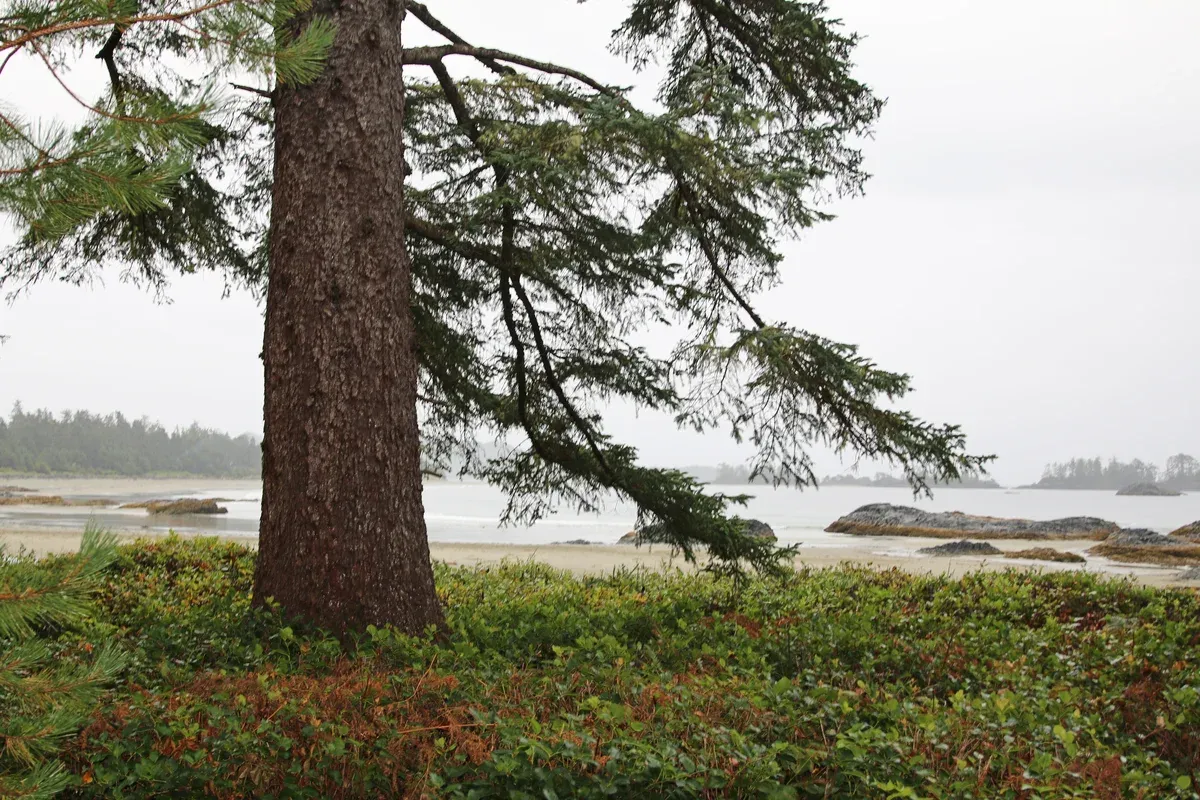
Chesterman Beach from the forest edge. Photo: Christof46, CC BY-SA 4.0, via Wikimedia Commons
Chesterman Beach at low tide
Chesterman Beach is the free counterweight to Long Beach, outside the park on the road south of the village, which is why locals default to it. It matters because it gives you the same open Pacific sand without a pass, and at low tide the beach doubles in width and you can walk far out toward Frank Island. The practical part: no pass and no fee, and the tide timetable sets whether you get the wide sand or the narrow one.
Check a Tofino surf report if you plan to swim or surf, and read the safety notes first, because there have been no lifeguards on any beach here since 2012. Beginners who want to get in the water should book with a school rather than go alone, which you can arrange through surf lessons in Tofino. More on the beach itself at Chesterman Beach.
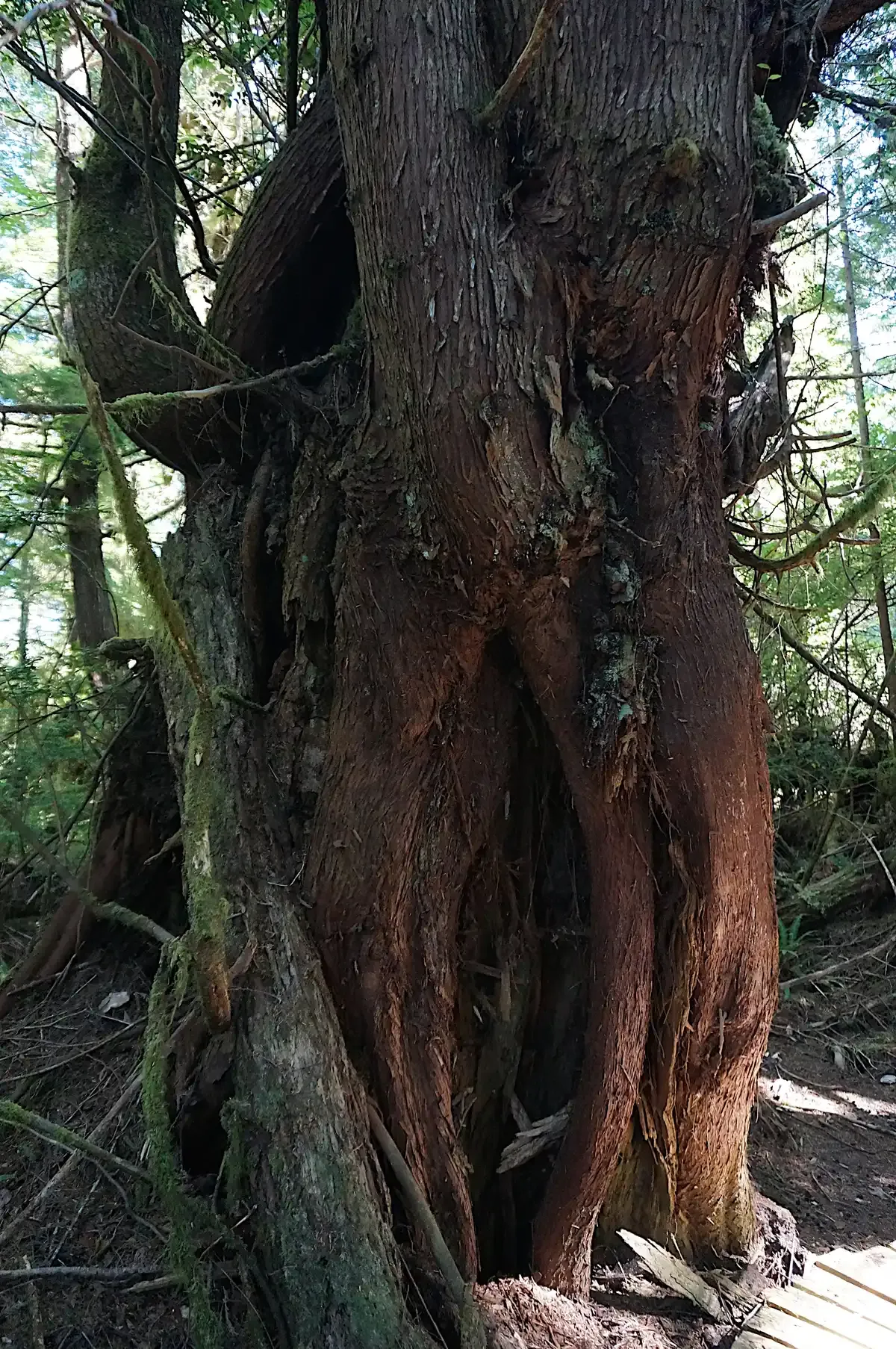
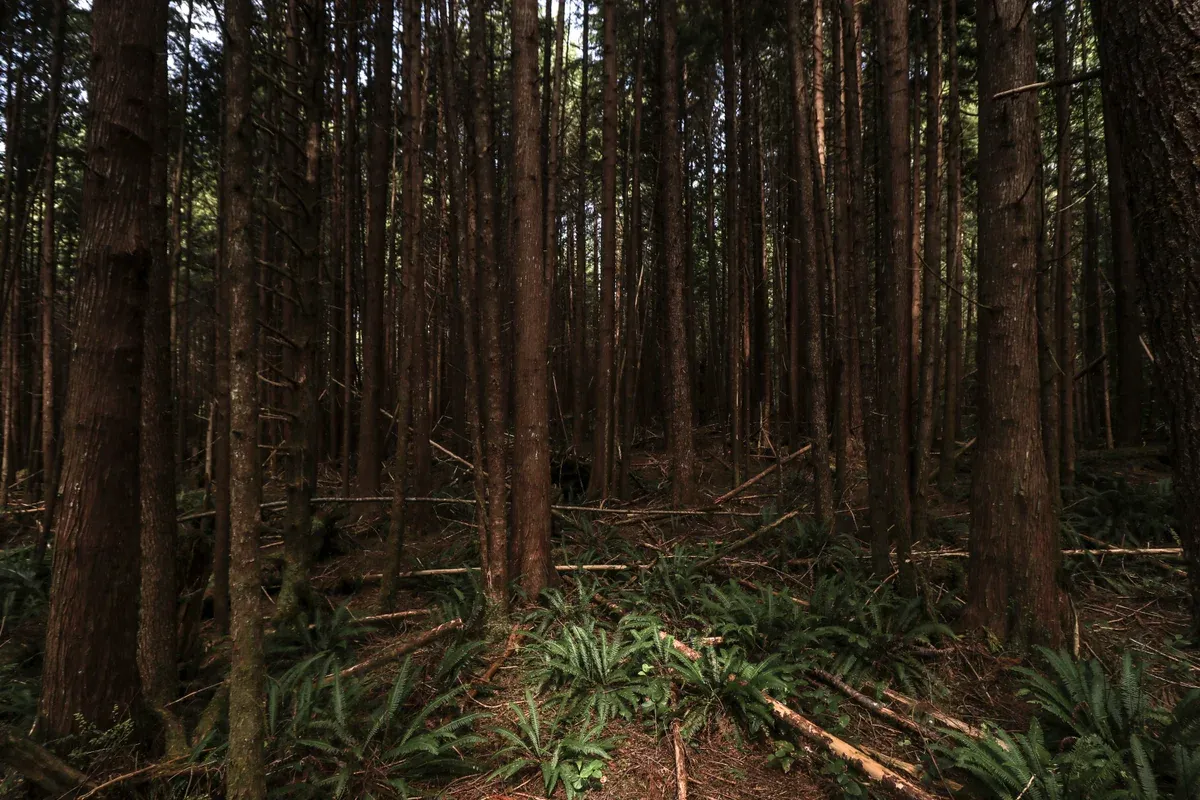
Old-growth forest in the park. Photo: Buiobuione, CC BY-SA 4.0, via Wikimedia Commons
The Rainforest Trail loops
The Rainforest Trail is where this coast shows off its forest, two 1 km loops on opposite sides of the Pacific Rim Highway through old-growth sitka spruce and cedar, on boardwalk with stairs. It matters because it is the shortest way to understand the temperate rainforest that everything else sits inside. The practical part: the trail sits inside the Long Beach Unit, so the park day pass applies.
Go in light rain if you can, because the forest is at its best when it is wet. Combine it with the nearby Nuu-chah-nulth Trail, 2.5 km one way through the same forest down to the shore. Both trails are listed on the Tofino hikes page and the Rainforest Trail page.
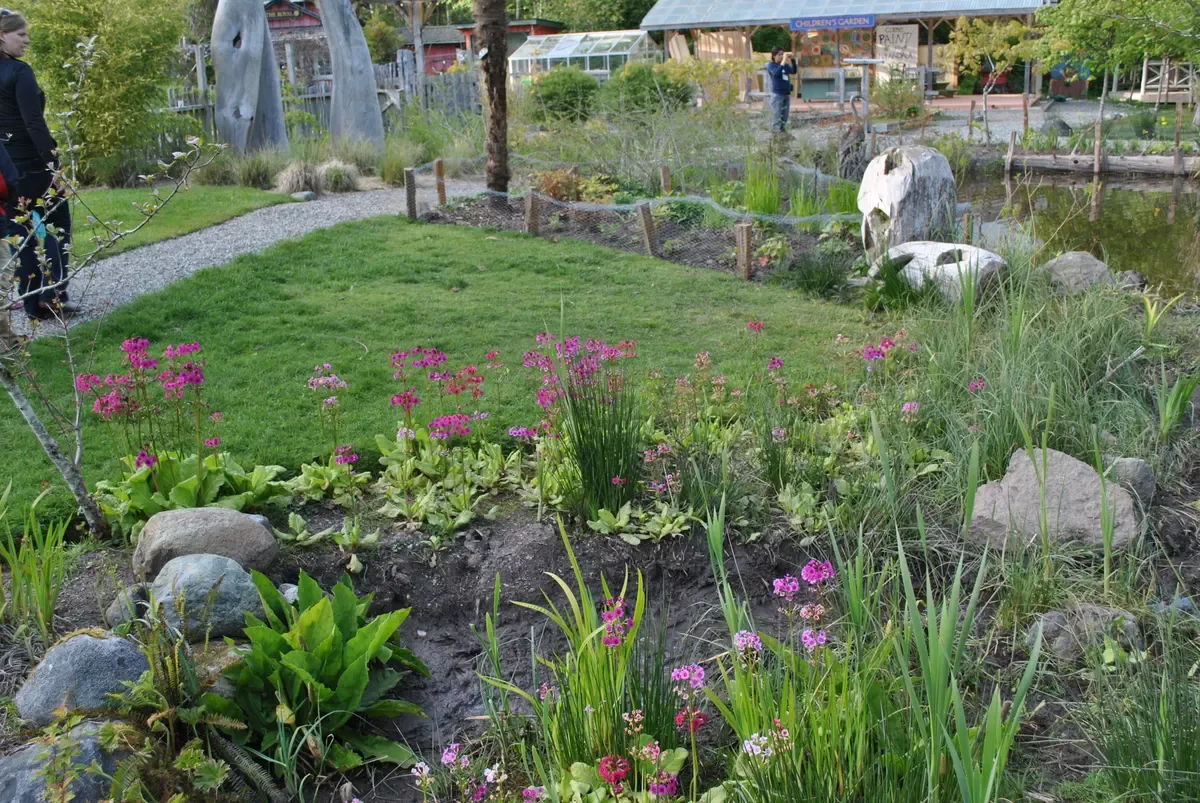
The gardens under their old name. Photo: Aaron Carlson from Menomonie, WI, USA, CC BY-SA 2.0, via Wikimedia Commons
Naa'Waya'Sum Gardens, the Former Botanical Gardens
The site at 1084 Pacific Rim Highway that most maps still call Tofino Botanical Gardens now runs as the Naa'Waya'Sum Coastal Indigenous Gardens, part of the Clayoquot Campus: 12 acres of gardens and trails on the edge of Tofino Inlet. It matters because it explains the plants of the Clayoquot biosphere in a way the wild trails do not, with guided tours and talks offered by the operator. The practical part: a day pass is US$7.10 (C$10), and Nuu-chah-nulth citizens and children up to 12 go free.
The operator currently lists the gardens and cafe as closed for the season and publishes no reopening date or hours, so check its site before you drive out. The Tacofino truck is on the same highway at number 1184, which makes an easy paired stop. Details on Tofino Botanical Gardens.
Meares Island's Big Tree Trail
Meares Island sits across the water from Tofino, and its Big Tree Trail is a boardwalk through old-growth red cedar. It matters because the island is not a park at all in the usual sense. It lies within Wah-nuh-jus-Hilthoois Tribal Park, declared by the Tla-o-qui-aht First Nation in 1984 to stop industrial logging, and a suggested trail donation on arrival supports their Tribal Parks Guardians.
The practical part: the only access is a water taxi from Tofino, since there is no bridge or road. An adult crossing runs about US$28.39 (C$40) as the operators list it, and the student and youth fares are in the water taxi table. Wear shoes with grip, because the boardwalk is rooty and slick when wet.
The crossing and the trail are set out on Meares Island.
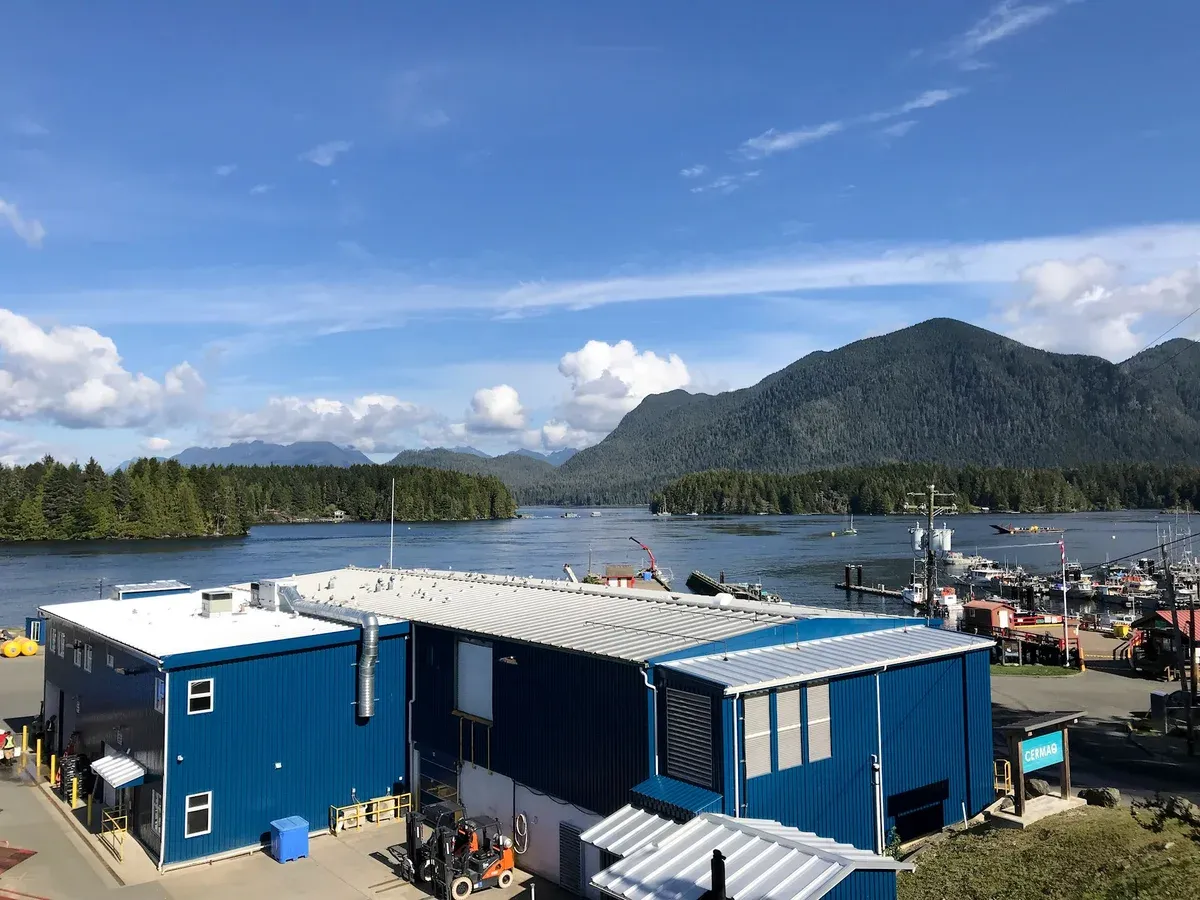
Working docks on Tofino Inlet. Photo: dvs from Vermont, USA, CC BY 2.0, via Wikimedia Commons
The harbour and Tonquin Beach
Finish with the two stops that cost nothing and sit inside the village. The harbour at the bottom of the hill is the working heart of town, where the fishing boats, the water taxis and every tour operator tie up, and where the morning departure rush happens. It matters because Clayoquot Sound, the UNESCO biosphere region designated in February 2000, starts here, and standing on the docks is the closest many visitors get to understanding how much of this region has no road access at all.
The practical part: mornings are the busiest window, several operators check you in at offices by the docks, and the floats are working surfaces, so keep children close. Then walk the Tonquin Trail from town. It starts in the village and ends on a staircase down to Tonquin Beach, the one beach you can walk to from the village.
Almost everything bookable in Tofino leaves from the harbour by boat, and the prices below are the platform's listed US-dollar figures. Boats run on tides and weather, so book the water day first and plan the beach days around it. Figures current in Q3 2026.
from $136.00
Tofino: Whale Watching Tour with Nature Guide
★★★★★★★★★★4.7(213 reviews)· 2h 30m
A 2.5-hour boat trip out of Tofino toward Flores, Vargas and Long Beach to look for gray whales, humpbacks and orcas, with a guide narrating the marine ecology along the way. The operator reports a 95% sighting success rate and a free raincheck if no whales are seen. The two morning departures run on an open Zodiac with a height limit.
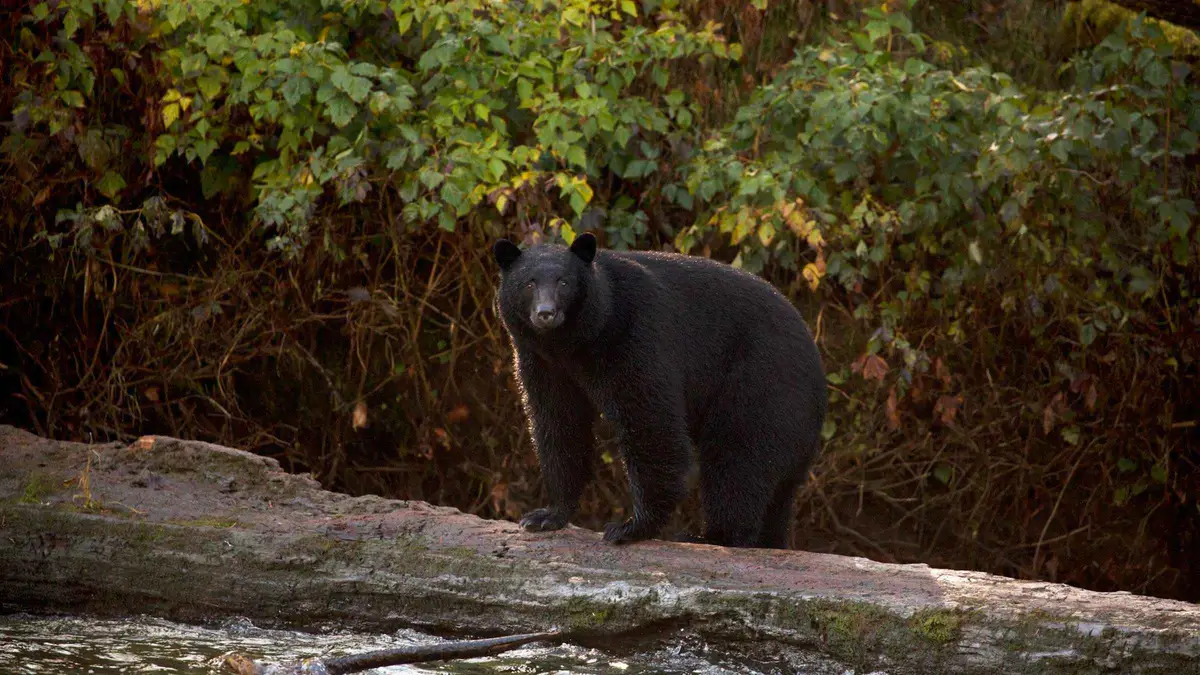
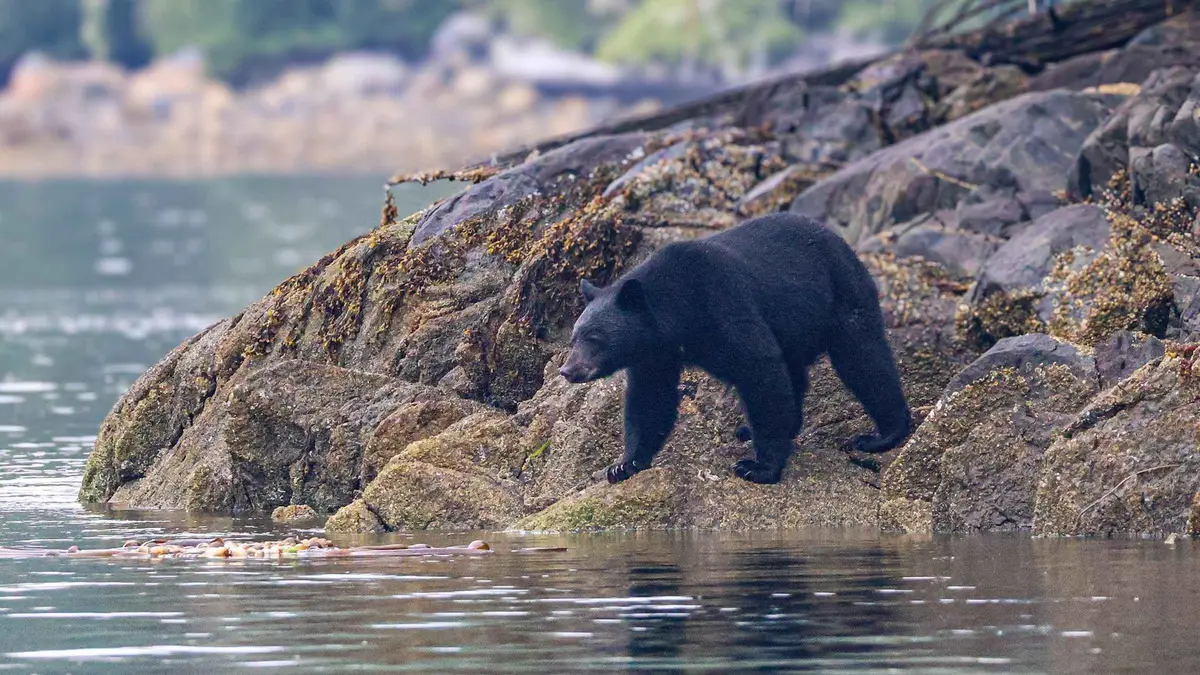
A small-group boat tour through Clayoquot Sound's sheltered inlets to watch coastal black bears foraging along the shoreline at low tide, with a guide covering bear behavior and local ecology. Departure times are timed to the tide and the trip is not suitable for anyone under 4 ft 8 in (145 cm).
A 3-hour RHIB wildlife safari in Clayoquot Sound with a maximum of 8 guests, where the guide adapts the route to weather, tides and wherever wildlife activity is strongest that day instead of following a fixed whale or bear route. It runs May 1 to Sep 30 and needs a minimum of 4 participants to depart, and no specific species is guaranteed.
A 25-minute boat ride into Clayoquot Sound to a remote floating dock, followed by a 2-hour guided kayak paddle through sheltered channels looking for seals, eagles and black bears. Children aged 6-15 must share a double kayak with a parent, and a single kayak requires the paddler to be at least 16.
Tofino: Floating Sauna Experience with Coastal Boat Ride
4 hours
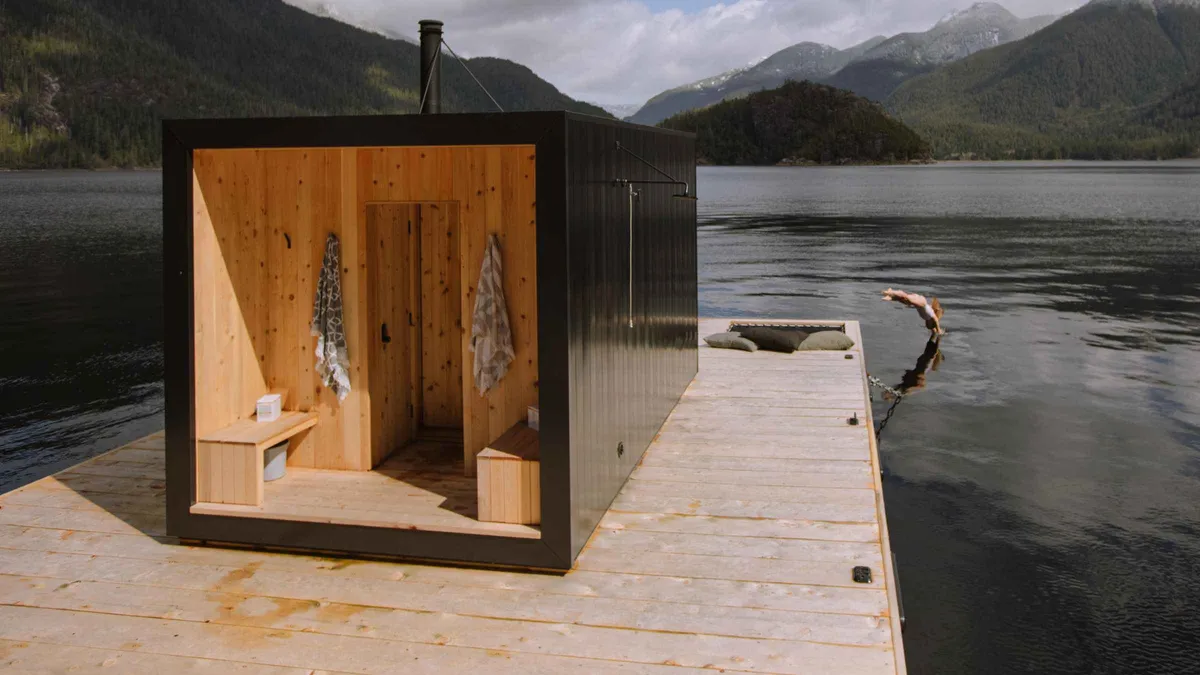
A private 4-hour trip to a wood-fired cedar sauna on a floating dock in Clayoquot Sound, reached by a 30-minute private boat ride, with cold-plunge access to the Pacific and kayaks and paddleboards on site. The $820 price covers a group of up to 4 and the listing has no reviews yet.
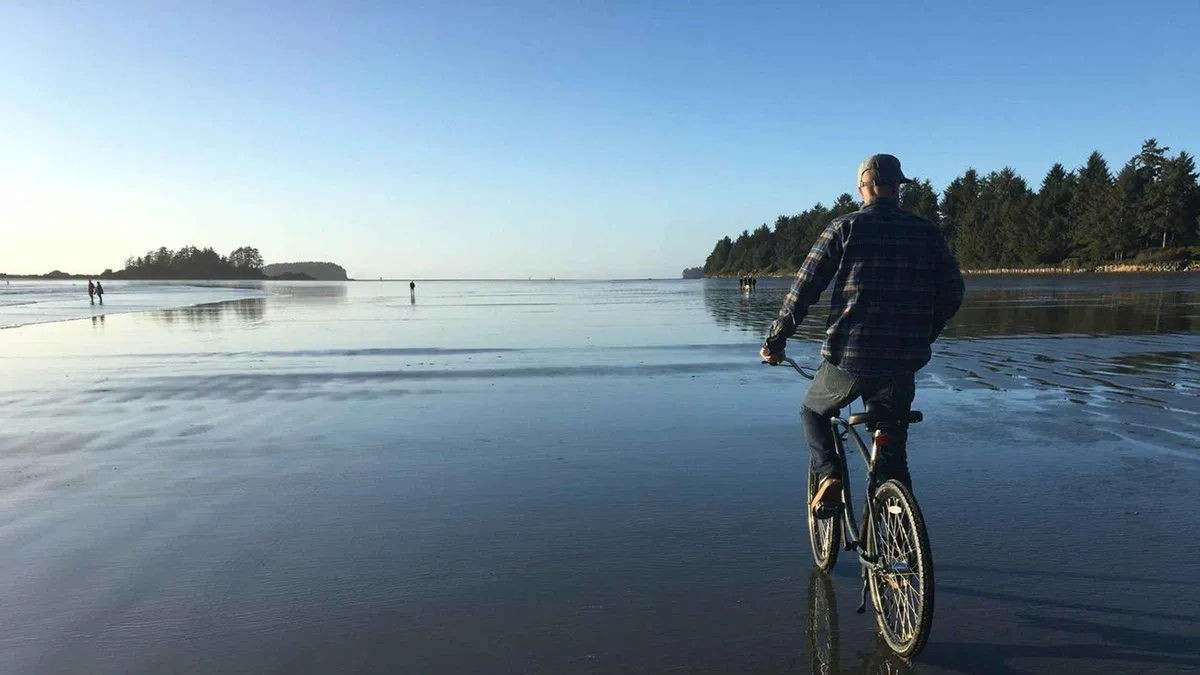
A 3-hour trip that starts with a beach-cruiser bike ride along Tofino's surf beaches, then swaps to a hike out to Penniger Point for Pacific views. Jeans are not allowed and it is not suitable for children under 5 or anyone who cannot ride a bike.
Prices, ratings and details are the platform's own. Dollar figures are the listed prices. The platform bills in your account's currency.
If You Only Have One Day
One day in Tofino is enough to get the shape of the place if you choose the route before you arrive. The whole day turns on a single rule, and the rest follows from it.
The rule the day turns on
Book the boat first or the beach first, never both loosely. The boats leave in the morning, run on the tide and the weather, and fill up in summer, so if a boat is in the plan it owns the first half of the day and you build the road stops after it. The beaches do not book out, do not cancel and cost nothing or one day pass, so they are always there when the boat is not.
Deciding this the night before is what separates a good single day from a wasted one. If you have two or three days instead, the Tofino itineraries page spreads the same choices out.
The Beach Day
Drive out of the village in the morning and start with one Rainforest Trail loop, 1 km of old-growth boardwalk inside the park. Then continue to Long Beach, where the day pass costs US$8.69 (C$12.25) per adult and seniors pay US$7.63 (C$10.75), youth free. Walk the sand and stop at the Kwisitis Visitor Centre at Wickaninnish Beach, open daily 9:30-16:30 in the autumn season, with winter hours to be checked before you go.
On the way back, time Chesterman Beach for low tide, which costs nothing and gives the widest sand of the day. If daylight remains and the season allows, the Naa'Waya'Sum gardens next to the highway sell a US$7.10 (C$10) day pass. That is a full road-side day with one paid entry at most.
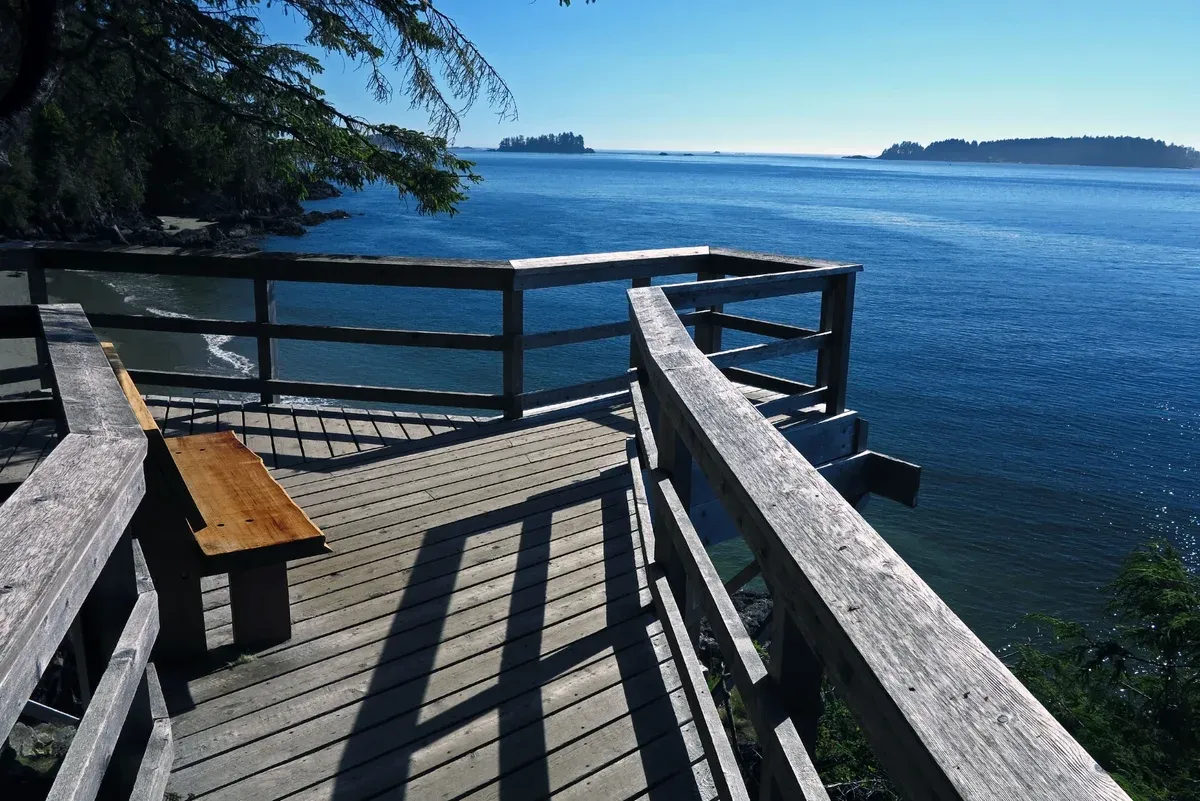
The Tonquin Trail overlook. Photo: David Abercrombie, CC BY-SA 2.0, via Wikimedia Commons
The Boat Day
Take the whale watching tour with a nature guide in the morning, a 2.5-hour boat trip at US$136.00 that goes out toward Flores, Vargas and Long Beach looking for grey whales, humpbacks and orcas, with a guide narrating the marine ecology. The operator reports a 95% sighting success rate and offers a free raincheck if no whales are seen. Waterproof suits are provided on the open Zodiac departures, so dress in layers underneath.
After the boat, spend the afternoon on foot in the village: the harbour docks, the shop streets above them and the Roy Henry Vickers Gallery. Walk the Tonquin Trail to the beach before dinner, since it starts in town and ends on a staircase to the sand. This version of the day costs the boat plus nothing else.
The Rain Day
Heavy rain closes nothing on this list, which is the point of having a rain plan. The Kwisitis Visitor Centre at Wickaninnish Beach is indoors, and the Naa'Waya'Sum gardens, when open, have forest paths that suit rain. The Roy Henry Vickers Gallery is indoors and in the village.
A storm-watching walk on a town beach in a real Pacific front is a genuine attraction here, and the season for the biggest systems is November to February. If you drive south, the Ucluelet Aquarium is an indoor stop from March 1 to November 30, open 10:00-16:30, at US$12.78 (C$18) for an adult, and its catch-and-release format suits a slow wet hour. More wet-weather ideas are on Tofino in the rain.
Match the day to the hours you have
The table below is the honest version of what fits. Tofino rewards picking one half of the region per day rather than trying to touch everything, and cutting the second half is usually the right call. If this page is the summary, the route page is the schedule, hour by hour.
One Rainforest Trail loop, Long Beach with the day pass, Chesterman at low tide
The boat and anything south of the park
6 hours
The boat in the morning, the harbour and Tonquin Beach after
Long Beach and the park drive
A wet day
Kwisitis Visitor Centre, the gallery, a storm walk, the Ucluelet aquarium from March to November
Any long beach plan, since the sand will be empty and cold
A winter day
Storm watching, a short forest loop, coffee and the brewery
Swimming plans of any kind, given no lifeguards and cold water
How Many Days Tofino Needs
Tofino is small by road but split by water, and that is what sets the day count. Boats eat mornings, the park eats an afternoon, and rain can eat a whole day if you have no indoor plan. These are the honest trade-offs, not a wish list.
Days you have
What fits
What you give up
Plan it
1 day
One beach day or one boat day, plus the village on foot
Two full days is the practical minimum for both halves of the trip, and three is the sweet spot for a first visit.
The Park Pass and the Free Beaches
This is the single most common mistake first-time visitors make, and it is easy to avoid. Parks Canada, which runs Pacific Rim National Park Reserve, publishes the fees, and the rule is about where you park, not where you walk.
What the park pass costs
Parks Canada charges a daily admission fee for the Long Beach Unit of Pacific Rim National Park Reserve, the unit between Tofino and Ucluelet that you reach by road. The figures below are from the Parks Canada fee schedule. If you are coming for more than a few days in a year, the annual Discovery Pass for a family or group can work out cheaper than repeated day fees.
Pass
Price
Who it covers
Adult, daily
US$8.69 (C$12.25)
One adult, 18 to 64
Senior, daily
US$7.63 (C$10.75)
One adult, 65 and over
Youth, daily
Free
Everyone 17 and under
Family or group, daily
US$17.39 (C$24.50)
Up to 7 people arriving in one vehicle
Annual Discovery Pass, family or group
US$118.89 (C$167.50)
A vehicle's group for a full year at all Parks Canada places
Wickaninnish Beach, inside the park. Photo: David Abercrombie, CC BY-SA 2.0, via Wikimedia Commons
Which beaches need it and which do not
The pass attaches to the Long Beach Unit's lots, so it applies when you drive into the park between Tofino and Ucluelet. Long Beach itself, the Kwisitis Visitor Centre and the Rainforest Trail all sit inside that unit, so the pass covers them. Everything in town is outside the park and free: Chesterman Beach, Mackenzie Beach and Tonquin Beach need no pass, and Cox Bay, the main surf beach, is outside the park too.
Parks Canada publishes no cap on Long Beach parking, and arriving early is the only advice it gives. The full rules, and where the pass is bought, are on the park pass page.
The path between the two towns
ʔapsčiik t̓ašii is a 25 km paved path for walking and cycling that runs from Tofino to Ucluelet through the park, built with the Tla-o-qui-aht and Yuułuʔiłʔatḥ First Nations, with the final segment connected in summer 2024. It matters because it lets you cover the park corridor without a car and without highway shoulders, and it links the town beaches to the park's trailheads. The practical part: a guided version of the same idea exists as the bike and hike tour, a 3-hour trip that rides the surf beaches then hikes out to Penniger Point.
There have been no lifeguards or Surf Guards on any Pacific Rim beach since 2012, when federal funding for the service ended, and Parks Canada's own surfing guidance is that every beach is unsupervised. This applies to Long Beach and to every town beach alike, and it is the single most important safety fact on this coast. Rip currents are real here, the water is cold year-round, and black bears, wolves and cougars are present in the park, so standard wildlife-sense applies on the trails.
What to do instead is simple: learn what a rip current looks like before you swim, keep children within reach, and if you want to surf, book with a school where instructors and equipment come as a set through surf lessons in Tofino. The fuller picture is on Tofino safety and surfing in Tofino.
The Half of Tofino You Reach by Boat
Clayoquot Sound covers more water and forest than the road side of the trip by a wide margin, and everything in it needs a boat or a floatplane. The boats leave from the harbour in the morning and follow the tide.
The whales, migration and residents
The northbound grey whale migration passes directly offshore of Tofino from late February through May, peaking late March into April, when more than 20,000 grey whales move up the coast toward Arctic feeding grounds. That is the headline season, and it is not the only one. A resident group of grey whales, the Pacific Coast Feeding Group, stays in the shallow waters of Clayoquot Sound and Barkley Sound year-round, which means whale sightings remain possible through summer and into fall.
The practical part: the whale watching tour with a nature guide runs 2.5 hours at US$136.00, reports a 95% sighting success rate and offers a free raincheck if no whales appear, with waterproof suits provided on the open Zodiac departures. The Pacific Rim Whale Festival marks the spring peak, and its 2027 edition runs 13-20 March across Tofino and Ucluelet. Everything about seasons and operators is on whale watching in Tofino.
Bears on the shoreline
Black bears feed along the shoreline of Clayoquot Sound, and the way to see them properly is from a boat at low tide, when they turn over rocks and feed on the beach at the forest's edge. It matters because this is wildlife watching done on the bears' terms, from the water, in small groups, with a guide who times the trip to the tide rather than to a clock. The practical part: the bear watching boat tour runs 2.5 hours at US$136.00 through the sound's sheltered inlets, with a guide covering bear behaviour and local ecology, and departure times move with the tide table.
It is not suitable for anyone under 4 ft 8 in (145 cm), which catches some families out, so check before booking. Where and when the bears feed, and what else is on offer, is on bear watching in Tofino.
On the boardwalk to Hot Springs Cove. Photo: Kristina D.C. Hoeppner from Wellington, New Zealand, CC BY-SA 2.0, via Wikimedia Commons
Hot Springs Cove
Hot Springs Cove, in the park BC Parks renamed Nism̓aakqin Park in 2025, sits in the northwest of Clayoquot Sound in Hesquiaht territory, between the Hesquiat Peninsula and Flores Island. It was formerly Maquinna Marine Provincial Park, and most searches still use the old name. There is no road access, so the only way in is boat or floatplane. BC Parks charges no entry fee for the springs themselves, which means the entire cost is the transport.
From the dock, a boardwalk through old-growth rainforest takes about half an hour each way down to the pools, where the hot water cascades down a rock face and cools as it meets the sea. The practical part: the Hot Springs Cove tour is a 6-hour round trip on a covered cabin cruiser at US$222.00, with about 2 hours for soaking, and the boardwalk stairs and slippery rocks make it unsuitable for anyone with mobility impairments. Bring water, since none is potable on site.
Meares Island is the closest island to town and the easiest boat trip, a short water taxi crossing to the Big Tree Trail, a boardwalk through old-growth red cedar. It matters because the island is Wah-nuh-jus-Hilthoois Tribal Park, declared by the Tla-o-qui-aht in 1984 to stop industrial logging, and the crossing and the suggested trail donation on arrival support the Tribal Parks Guardians who keep it. The practical part: there is no bridge, the fares below are operator-quoted rates rather than a fixed tariff, and the boardwalk is rooty and slick when wet, so wear grippy shoes.
Tofino's food identity comes from a handful of kitchens that started as food trucks, plus a small brewery and serious coffee. This site names only places it can cite from their own official pages, which keeps the list short and honest.
The food trucks that became restaurants
Two trucks shaped how this town eats, and both are still findable. Tacofino began in June 2009 as a single orange food truck parked at 1184 Pacific Rim Highway, and the original truck is still there, while the brand has since grown to roughly a dozen locations across British Columbia. It matters because it started the Tofino street-food story, and the highway truck sits on the same road as the Naa'Waya'Sum gardens at number 1084.
No official source prints menu prices, so this site prints none. SoBo started in 2003 as a food truck in a gravel lot behind a surf shop and moved to its bricks-and-mortar home at 311 Neill Street in 2007, where chef Lisa Ahier's kitchen has run ever since. The full eating guide is on where to eat in Tofino, and the truck's own story is on Tacofino.
Dinner worth booking
Wolf in the Fog, at 150 Fourth Street, opened in summer 2014 and was named enRoute's Best New Restaurant in Canada that same year, which put Tofino on the national dining map. It matters because it is the town's flagship dinner reservation, and because it earned that reputation in a village of 2,500 people, which says something about the food culture here. The practical part: no official source prints menu prices, so none appear here.
For the honest version of this site's policy, we name only restaurants we can cite from official pages, so the wider list beyond the cited few lives on the restaurants page rather than being padded here. If the evening calls for something simpler, pizza in Tofino has its own page.
Coffee and beer
Tofino Brewing Company opened in April 2011 and brands itself proudly brewed in British Columbia since 2011. It matters because it is the town's own beer, and no official source prints a pint price, so none is quoted here. The practical part: confirm the brewery's hours in the off-season.
Where you sleep decides how your days run, because the village, the beach strip and the campgrounds each sit at a different distance from the harbour and the surf.
In the Village
The village is the walkable option, close to the harbour where the boats leave, the restaurants, the gallery and the shops, so a village room means no car needed in the evenings. It matters for anyone on the boat-heavy itinerary, since morning check-ins at the Marine Adventure Centre are a short walk from the village hotels rather than a drive. The Michelin Guide 2026 gives Keys to two hotels in the region: the Wickaninnish Inn, which holds one Key, and Clayoquot Wilderness Lodge, which holds three Keys, the guide's highest ranking.
The beach strip along the road between the village and Cox Bay is where the surf-oriented places sit, close to Chesterman, Mackenzie and Cox Bay, so the trade is morning beach access for evening walks to dinner. It matters for anyone whose days revolve around tides and boards, and for families who want sand as the default activity. Resorts along this stretch range from simple motel-style rooms to full-service properties.
Whatever the room rate, the taxes stack on top, and they are worth knowing before a booking looks surprising. On a Tofino hotel room you pay the federal GST of 5%, British Columbia's PST of 8% on short-term accommodation, and Tofino's own municipal and regional district tax (MRDT) of 3%. Our sum: 16% on top of the room rate, before any fee the property itself may add.
The MRDT is the reason a quoted rate and the final bill can differ by more than visitors expect. Camping is the cheapest roof on the peninsula. Options and booking logic are on camping in Tofino, with the full range back on where to stay in Tofino.
Ferry, Road or Seaplane
Almost everyone drives in on Highway 4, from Vancouver by ferry or from elsewhere on Vancouver Island. Flying is a real option and takes under an hour. The Highway 4 Kennedy Hill rebuild finished in spring 2023, though the road still closes for planned work on some days, so check DriveBC before you set off.
By ferry and car
From Vancouver you take a BC Ferries crossing to Nanaimo, then drive Highway 4 through Port Alberni to Tofino, roughly 195-200 km from Nanaimo. Two routes work: Horseshoe Bay to Departure Bay, and Tsawwassen to Duke Point, which suits drivers coming from the US border side. BC Ferries requires online booking and payment in advance on these routes, and Saver fares move with demand, so the same crossing costs different amounts on different sailings.
Two airlines connect Vancouver and Tofino, and both take under an hour. Harbour Air flies seaplanes from downtown Vancouver's Coal Harbour to Tofino Harbour in about 45 minutes, with one-way fares from US$98.66 (C$139). The water landing runs in spring and summer, and in winter a wheeled service uses Vancouver International Airport's South Terminal instead.
Pacific Coastal Airlines flies year-round from Vancouver airport's South Terminal to Tofino-Long Beach Airport on Saab 340 aircraft, about 46 minutes, which makes it the all-weather option that does not depend on the season. The airport sits between Tofino and Ucluelet on the Pacific Rim Highway, and sources disagree on its exact distance from town, so this site prints none. Flight details are on Tofino airport and flights.
By bus, and from Victoria
Tofino Express Bus runs the Nanaimo, Port Alberni, Ucluelet and Tofino corridor daily, year-round. The operator's site prints no route fare table. The fare for your leg shows only in its booking tool, so this site prints no bus fare.
From Victoria, the drive south is the long one, roughly 315-340 km along Highway 4's approach through Port Alberni, and bus itineraries connect through Nanaimo. Once you are in town, a car is useful for the park and the beaches but not strictly necessary for the village and the boats. The Victoria route is on Victoria to Tofino, local transport on getting around Tofino, and wheels on car rental in Tofino.
Tofino Month by Month
Average daily high by month in Celsius with the Fahrenheit reading underneath, from the Environment and Climate Change Canada 1981-2010 climate normal for the Tofino A station at the airport. Rain, not cold, is what changes through the year.
8.3°C47°F
JanuaryJan
9°C48°F
FebruaryFeb
10.1°C50°F
MarchMar
11.9°C53°F
AprilApr
14.5°C58°F
MayMay
16.8°C62°F
JuneJun
18.9°C66°F
JulyJul
19.1°C66°F
AugustAug
17.8°C64°F
SeptemberSep
13.6°C56°F
OctoberOct
10°C50°F
NovemberNov
8.1°C47°F
DecemberDec
Driest months, under 130 mm of rain
Shoulder months, whales in spring
Storm season, 440 to 490 mm a month
Wet and quiet, grey whales from late February
The year totals 3,271 mm of rain, November is the wettest month at 492 mm and July the driest at 71 mm. The full monthly picture is on Tofino weather by month and the best time to visit.
What a Day in Tofino Costs
Entry prices here are low and official, and the money goes on boats, food and beds instead. The table below is a worked day for one adult using only official prices, so you can see the floor before the fun begins.
A worked day on official prices
Take one adult doing the full road-side day: the park, the gardens and the aquarium in Ucluelet. Every line below is the operator's own published price, and nothing is estimated except the total, which is our sum of the three entries.
Item
Cost
Source
Long Beach day pass, adult
US$8.69 (C$12.25)
Parks Canada fee schedule
Naa'Waya'Sum Gardens day pass, adult
US$7.10 (C$10)
Tofino Botanical Gardens
Ucluelet Aquarium, adult
US$12.78 (C$18)
Ucluelet Aquarium
Total for the three entries
Our sum US$28.57 (C$40.25) before food, fuel and a boat
Our sum
The free day, and what a boat adds
A genuinely free day exists here, which surprises people who assume Tofino is expensive to visit. Chesterman Beach, Mackenzie Beach, Tonquin Beach and Cox Bay cost nothing, the 25 km ʔapsčiik t̓ašii path to Ucluelet is free to walk or ride, and the village harbour costs nothing to stand on. What a boat adds depends on the boat. The whale watching tour with a nature guide is US$136.00 for 2.5 hours, and the Hot Springs Cove tour is US$222.00 for a 6-hour day with the soak included. The Meares Island water taxi is cheaper again at US$28.39 (C$40) for an adult.
Food, fuel and beds are where the budget really goes, and the full breakdown lives on what Tofino costs. Entry prices come from the Parks Canada fee page and the gardens' and the aquarium's own price lists.
Turn It Into Days
The itineraries below take the decisions on this page and set them into a schedule, with the boats first and the weather plan built in.
One day means choosing the boat or the beach, not both loosely. This route either takes the morning whale boat and the village afternoon, or the park and Chesterman loop, and says which to drop when the weather turns.
The beach-day route with the Rainforest Trail and Long Beach, pass prices included
Two days is the practical minimum for both halves of the trip, one road day and one water day. This plan books the boat before arrival, puts the park and beaches on the other day, and keeps the rain fallback for whichever day fails.
Three days adds Ucluelet, a second boat or the Meares Island crossing, and the breathing room that makes the rain harmless. This is the sweet spot for a first visit, and the plan sequences the boats around the tides.
Two trips go beyond the standard morning boats. One is the full-day run out to the hot springs, and one starts from the harbour at the other end of the peninsula in Ucluelet.
from $222.00
Tofino: Hot Springs Cove Tour with Wildlife Cruise
★★★★★★★★★★4.7(45 reviews)· 6 hours
A 6-hour round trip aboard a covered cabin cruiser through Clayoquot Sound to Maquinna Marine Provincial Park, then a 1.5 km boardwalk hike to soak about 2 hours in the natural hot springs at Hot Springs Cove. The boardwalk has stairs and the springs' rocks are slippery, so it is not suitable for wheelchair users or people with mobility impairments.
Whale watching & sightseeing tour in Ucluelet, Vancouver Island
★★★★★★★★★★4.9(68 reviews)· 3h 30m
A whale-watching trip out of Ucluelet aboard a large covered vessel with a heated cabin, indoor and outdoor seating and an onboard bathroom, run by a small family-operated local company. Groups stay small and infants must sit on an adult's lap.
Prices, ratings and details are the platform's own. Dollar figures are the listed prices. The platform bills in your account's currency.
Six Questions Before You Go
These are the questions that change a trip, answered with facts and linked to the page that owns each one.
Is Tofino on an island?
Not on one of its own. Tofino sits at the tip of the Esowista Peninsula on the west coast of Vancouver Island, at the end of Highway 4, and you drive in with no ferry for the town itself. Ferries and boats are needed only for the islands of Clayoquot Sound, such as Meares Island and Hot Springs Cove. Read more
Do I need a park pass for the beaches?
Only for the beaches inside Pacific Rim National Park Reserve, which means the Long Beach Unit between Tofino and Ucluelet. The adult day pass is US$8.69 (C$12.25), youth 17 and under go free, and a family or group of up to 7 in one vehicle pays US$17.39 (C$24.50). Chesterman, Mackenzie, Tonquin and Cox Bay are outside the park and free. Read more
Is it safe to swim or surf?
The water is cold year-round and the rip currents are real, and no beach here has had lifeguards since 2012, so every beach is unsupervised. If you want to surf, book with a school where instructors, suits and boards come together. Read more
When do the whales pass?
The northbound grey whale migration passes offshore from late February through May, peaking late March into April, with more than 20,000 whales moving up the coast. A resident group stays in Clayoquot Sound year-round, so sightings are possible all season on a boat. Read more
Can I visit in winter?
Yes, and winter is its own season. November to February brings the biggest Pacific storms, which is exactly why some people come, and the town has indoor stops that work in heavy rain. The practical trade is short days, wet trails and cold water, so plan beaches as walks rather than swims. Read more
Can I get around without a car?
In the village, easily, since the harbour, restaurants and shops are walkable and the boats leave on foot. The park and the surf beaches need wheels, a bike on the 25 km paved path to Ucluelet, or the bus. Tofino Express Bus runs the corridor daily, and its fares show only in the operator's booking tool. Read more
Tofino Questions
Is Tofino worth visiting?
For the right trip, yes, and the reason is the split that defines the place. By road you get Long Beach in the national park, the surf beaches and old-growth forest loops. By boat you get whales, bears, Meares Island and Hot Springs Cove. Give it two or three days rather than a day trip from Vancouver, and plan around the rain rather than the calendar. The full case is on things to do in Tofino.
What is Tofino famous for?
Surfing on cold-water beaches, storm watching in winter, and as the launch point for Clayoquot Sound, a UNESCO biosphere region since February 2000 shared by the Tla-o-qui-aht, Ahousaht and Hesquiaht First Nations. The town of about 2,500 sits in Tla-o-qui-aht territory at the end of Highway 4 in British Columbia, and its food reputation rests on trucks that became restaurants, like Tacofino and Wolf in the Fog.
Is Tofino expensive to visit?
The entry prices are low and the beds and boats are not. The national park day pass is US$8.69 (C$12.25), the Naa'Waya'Sum gardens US$7.10 (C$10) a day, and a genuinely free day is possible on the town beaches. A whale boat adds US$136.00, and hotel rooms carry 16% tax on top of the rate. The honest breakdown is on what Tofino costs.
How many days do you need in Tofino?
Two full days is the minimum that covers both halves of the trip, one road day for the park and beaches and one water day for a boat. Three days adds Ucluelet or a second boat and absorbs one rainy morning without loss. Five days is the comfortable version. The trade-offs are laid out in the table above, with the three-day plan as the sweet spot.
What is the difference between Tofino and Ucluelet?
They are two towns at the end of the same highway, 40-42 km and 30-40 minutes apart. Tofino is the one at the end of the road, with the harbour that launches the boats into Clayoquot Sound. Ucluelet has a working harbour, its own restaurants and the free Wild Pacific Trail, and its aquarium is the region's best rainy-day stop from March to November.
Where should I stay in Tofino?
Choose by itinerary more than by budget. The village puts you within walking distance of the boats, restaurants and shops. The strip south of town puts you at Chesterman, Mackenzie and Cox Bay, which is the surf and family choice. Camping and rentals fill the cheap and group ends. Pick the area first, then compare rooms on where to stay in Tofino or the wider where to stay hub.
Which tour should I book first?
Book the water day before the beach days, because boats run on tides, weather and morning departures and fill in summer. For most first visits the right first booking is the whale watching tour with a nature guide at US$136.00, which reports a 95% sighting success rate and a free raincheck if no whales appear. If bears interest you more, the bear watching boat tour at US$136.00 runs the same length and follows the tide instead of the clock. The rest are compared on Tofino tours.
Tofino on Film: The Beaches, the Boats and the Weather
Three independent travel films shot in Tofino, useful for seeing the scale of the beaches and the harbour before you go.
Best Things To Do In Tofino, British Columbia (Our Top 10)
A countdown of the town's main outdoor stops, useful for seeing the beaches, the harbour and the forest trails at their real scale.
Video: Two Roaming Souls - Jake & Emily
2 Days in Tofino, British Columbia: Ultimate Guide + Things To Do in 2026
A two-day route through the town and the park, filmed on the ground, that shows how the road side of the trip fits together.
Video: Eric and Sarah
Ucluelet and Tofino: the ONLY TRAVEL GUIDE you'll need! | Vancouver Island
Tofino and Ucluelet in one film, useful for judging whether the southern town earns its own half day.
Video: Alex & MJ
The boats are the half of Tofino that books out first, so compare them before you pick a beach day. Every card on the site carries the operator's own listed price.
Official prices first, and free cancellation terms are shown on every card where the platform lists them
The office, phone and email above belong to the city's own visitor service, published on the official tourism site and checked on 2026-09-23 — they are not this site's contact details. To reach us, use the contact page.
 Tofino City Guide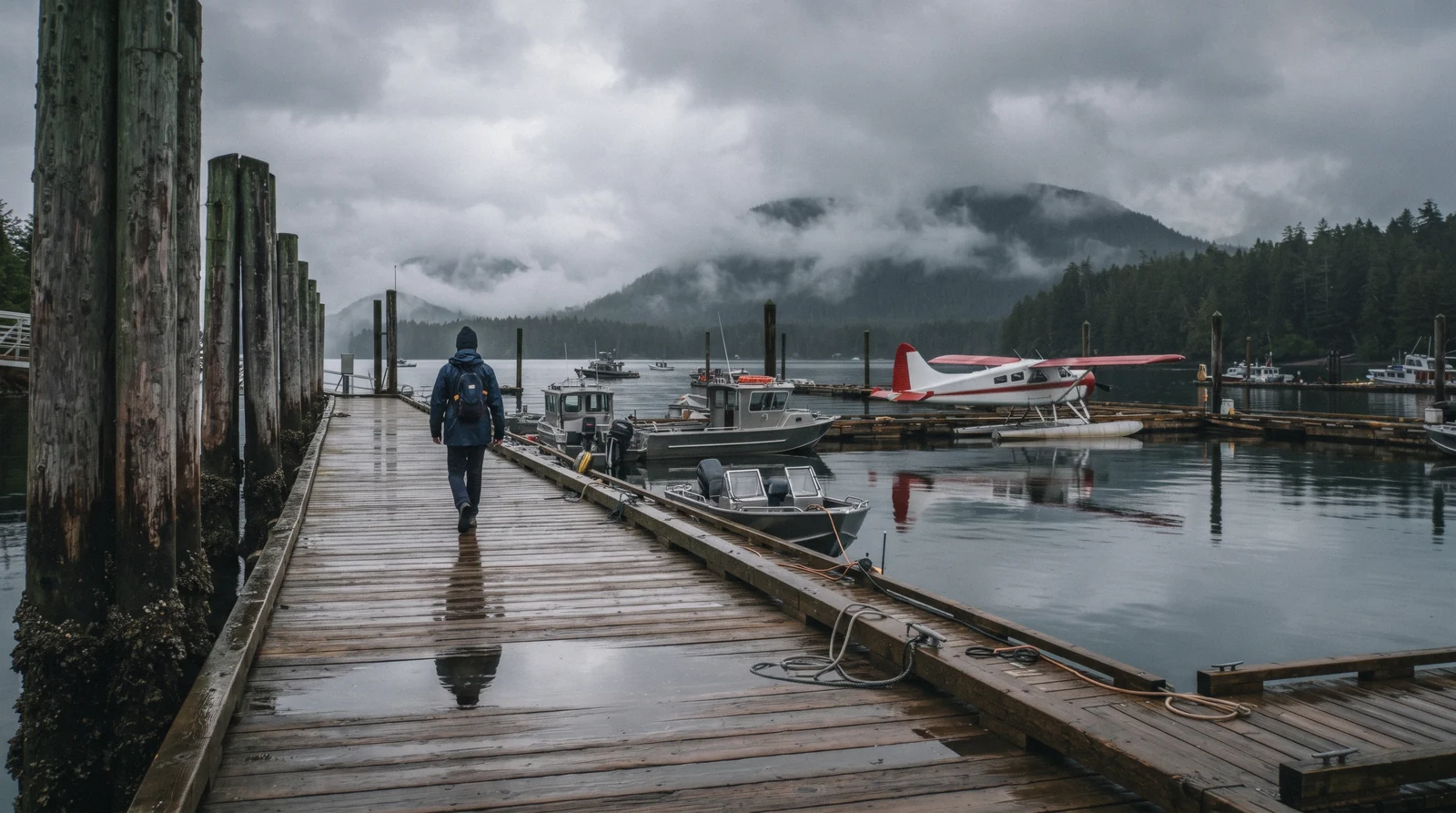
 from $136.00