 Tofino City Guide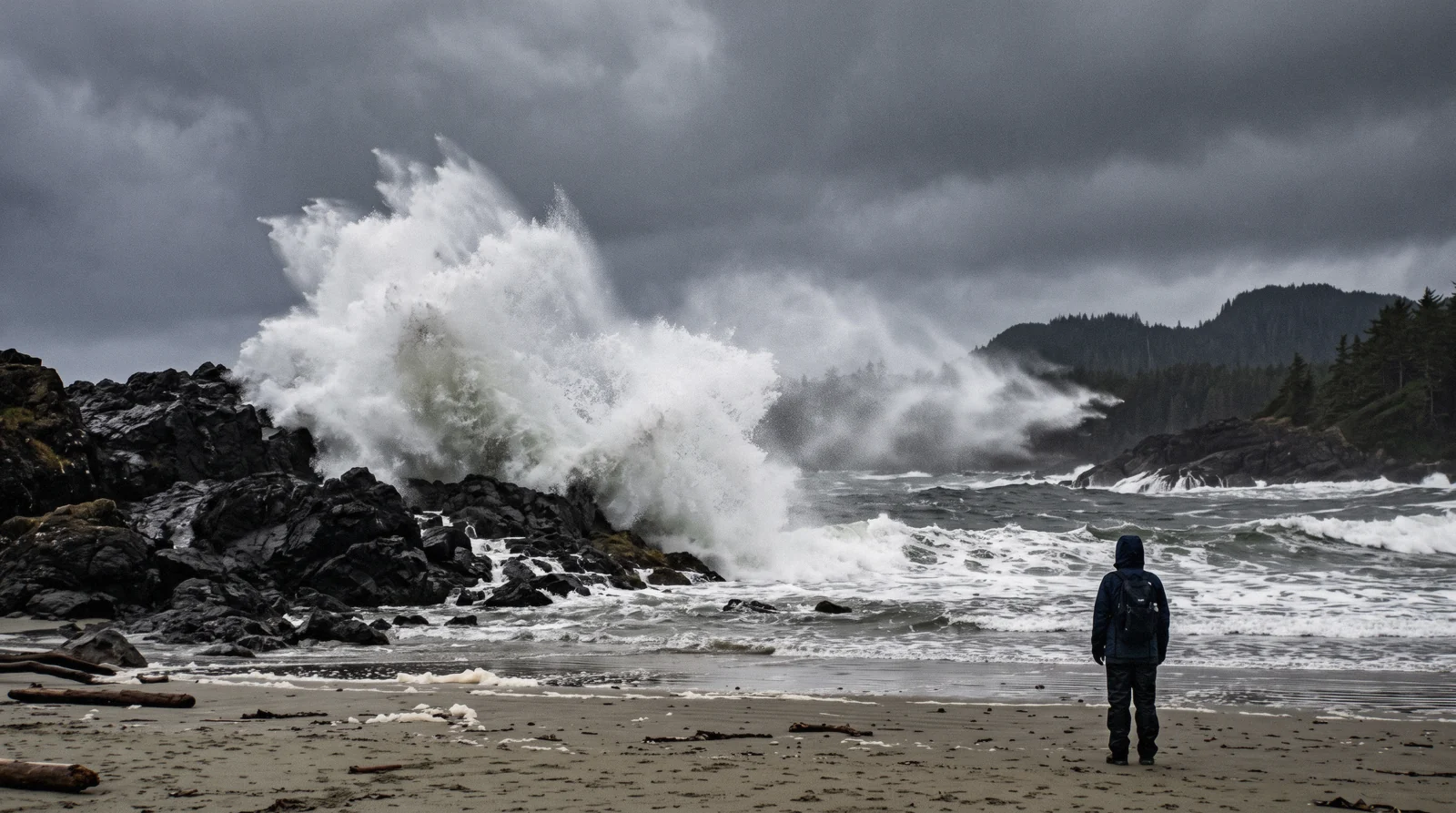
Storm Watching in Tofino
Tofino storm watching has become one of the main reasons people visit this coast in the colder months. When the fall and winter storms arrive, the open Pacific sends wave after wave onto the beaches and rocky points around town, and people gather at the shore to watch it. This page covers the season, the five named viewpoints, where to stay if you want a front row seat, and the safety rules that matter when the surf is up.
Quick answer Storm watching in Tofino at a glance
Tofino storm watching season runs through fall and winter, when wind racing across the Pacific builds waves up to 20 feet against the exposed coast.
Key takeaways
- Watch from North Chesterman Beach, Long Beach or the Kwisitis Visitor Centre deck at high tide
- Stay off tidal rocks and keep clear of driftwood logs
- Read the full safety rules before you go
Key facts
Opening hours
| All viewpoint beaches | Open–24 hours |
|---|---|
| Kwisitis Visitor Centre deck | Outside, always accessible–Centre itself keeps its own hours |
Closed The beaches never close
Admission
- Adult
- Free from any public beach
- Reduced
- Covered Boat Winter Wildlife, Otters + Islands Tour: $101.00 for 2 hours
Planning it
- Time needed
- A viewpoint visit is typically 30-60 minutes
- Address
- Wickaninnish Beach, Long Beach Unit, Pacific Rim National Park Reserve, near Tofino, BC
Watching storms itself is free everywhere. The park day pass applies only at the viewpoints inside Pacific Rim National Park Reserve, priced from Parks Canada on 2026-09-23.
Watching from a free village beach, or a park viewpoint that needs the day pass?
| Option | Price | Covers | Cancel | Book |
|---|---|---|---|---|
| Pacific Rim day passAnyone watching from a viewpoint inside the national park reserve. | US$8.69 (C$12.25) | Long Beach, Wickaninnish Beach, Florencia Bay, all day | Not applicable, day-of purchase | Official site |
| Covered Boat Winter Wildlife, Otters + Islands Tour, 2 hoursVisitors who want to see the winter ocean from a covered boat. | $101.00 | A winter boat trip on the same coast, not a storm chase | Per the operator's own cancellation terms | Check Availability |
North Chesterman Beach and Cox Bay, near the village, need no pass at all.
Winter Boat Tours On The Same Coast
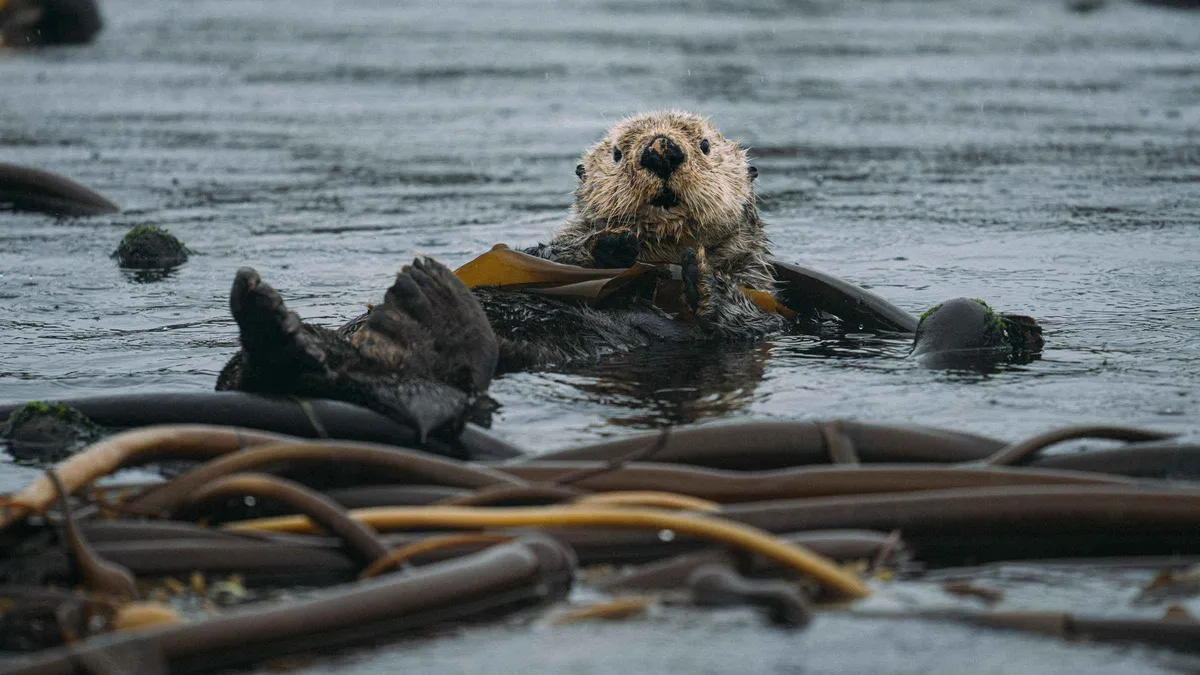
There is no storm chasing boat trip on this list, and we will not pretend otherwise. Heading out on a small vessel during a genuine storm would be a poor idea. What does exist is a winter wildlife boat tour that runs on the same stretch of open coast where the big waves build, so you can see the water in its colder season mood from a covered cabin rather than a beach.
 from $101.00
Tofino: Covered Boat Winter Wildlife, Otters + Islands Tour
A 2-hour wildlife-watching trip on a covered 12-passenger boat through Clayoquot Sound to look for sea lions, seals, otters and eagles while staying dry. It is marketed for wet-weather days and is not suitable for wheelchair users.
Check AvailabilityPrices, ratings and details are the platform's own. Dollar figures are the listed prices. The platform bills in your account's currency.
What Storm Watching Costs
Watching storms from any public beach costs nothing. The only paid way onto the water in winter is the one covered boat tour listed on this site. Figures current in Q3 2026.
| Experience | Price |
|---|---|
| Storm watching from any public beach | Free |
| Covered Boat Winter Wildlife, Otters + Islands Tour, 2 hours | $101.00 |
Storm Watching In Tofino: Season, Viewpoints And Safety
Storm Watching Season
Tourism Tofino describes storm watching season as fall and winter. That is when the weather systems that define this coast roll in from the open ocean, and when the waves that draw crowds to the beaches reach their peak. The mechanism is simple geography. Tofino faces the open Pacific with no landmass between here and Japan. Wind that blows across thousands of kilometres of open water has nothing to slow it down, and nothing to break up the swell before it arrives. That fetch lets the wind build waves up to 20 feet by the time they reach the shore.
The result is a stretch of coast where an ordinary afternoon of bad weather becomes a spectacle. Waves that size, hitting beaches and rocky points that face directly into the swell, throw spray well above the shoreline and reshape the sand with every big set. In summer the same beaches are calm enough for beginner surf lessons, per Tofino surfing. In the storm season the water temperature sits between 7°C and 14°C and Parks Canada describes winter conditions as challenging even for experienced surfers, which tells you something about the energy in the water. You do not need to enter the ocean to appreciate it. Stand well back from the waterline, watch the sets roll in, and you are doing what thousands of visitors come here to do between fall and spring.
Because the season is long, you do not need to hit a narrow window. Any fall or winter trip has a good chance of catching at least one proper blow, and the days between storms often carry leftover swell that is still worth watching.
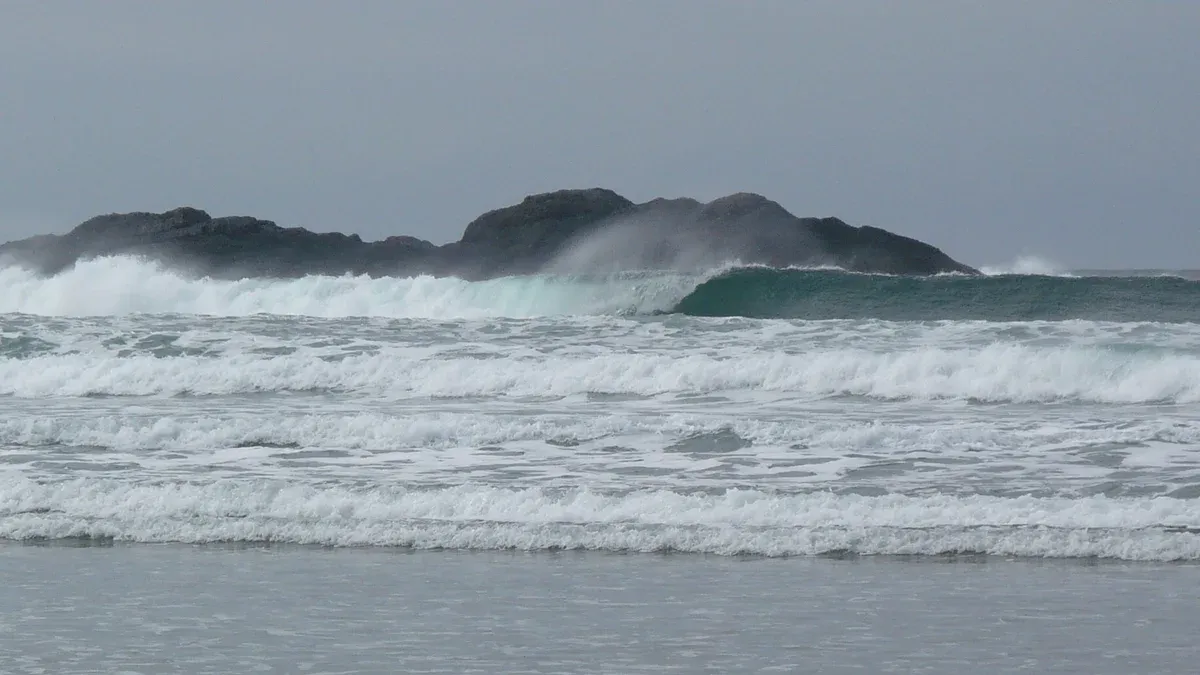
Waves breaking on the rocky outcrops at Chesterman Beach. Photo: Colin W, CC BY-SA 3.0, via Wikimedia Commons
North Chesterman Beach
North Chesterman Beach is named by Tourism Tofino as a storm watching viewpoint where the waves are smaller than at some other spots, but where the rocky outcrops produce dramatic spray when the surf hits them. That combination makes it a favourite for many visitors. The waves at the open end of the beach carry real force in the storm season, and when they meet the rocks at the north end the water explodes upward instead of simply rolling in and dying out on the sand. On a windy day the spray hangs in the air and drifts across the point.
Because the waves here are described as smaller than the biggest breaks on the coast, this is also a reasonable place to start if you are new to storm watching and want to get a feel for the conditions before heading somewhere with heavier surf. The beach faces the open ocean, so the swell arrives directly, and the wide sand gives you room to stand well back from the waterline. The Wickaninnish Inn sits in the North Chesterman Beach area, which is one reason the beach is closely associated with storm watching accommodation. Even if you are not staying there, the beach itself is public, and you can walk out and watch from the sand or from near the rocky sections, always keeping the distance rules in mind. Parking is at the beach access points, and on stormy weekends the lot fills early, so arriving in the morning helps.
Cox Bay At Pettinger Point
Cox Bay appears on Tourism Tofino's list of storm watching viewpoints specifically at Pettinger Point, where the focus is breaking waves. The bay funnels swell toward the point at its southern end, and when a storm swell wraps in, the waves here stand up and break with real power before the water rushes up the beach. Pettinger Point gives you a slightly elevated, rocky angle on that action, different from watching the same energy flatten out along a long sandy strand.
Cox Bay is also one of the beaches Parks Canada lists among the surf beaches of the area, described as unsupervised, meaning no lifeguards are on duty at any time. That matters in storm season. The waves that look impressive from the point are genuinely dangerous close up, and rogue or sneaker waves can reach further up the sand than the previous ten waves combined. Keep to the higher part of the beach or the rocks well above the reach of the surf, and never turn your back on the water while a big swell is running. The beach sits a short drive south of Tofino along Pacific Rim Highway, and other lodges along Cox Bay also market storm watching, though this site names only the Wickaninnish Inn as accommodation.
Long Beach
Long Beach is the biggest single storm watching venue on this coast, and its sheer size changes the experience. Tourism Tofino describes it as a 16 km stretch of sand with volcanic rock formations, part of the Long Beach Unit of Pacific Rim National Park Reserve. When a storm swell arrives, the beach gives you kilometres of open view, so you can watch wave after wave line up across the entire horizon rather than crowding onto one small pocket of sand with everyone else. The dark volcanic rocks scattered along the shore add a second element, because waves that would simply slide up a flat beach explode against them and send spray climbing into the wind.
Walk a few hundred metres in either direction from whichever access point you use and you will usually have the view to yourself, even on days when the parking lots are busy. The beach is within the national park, so the standard park rules apply, and Parks Canada lists it among the unsupervised surf beaches with hazard maps showing no-go zones and rip currents. In storm season the same rip currents that concern surfers are a reason to stay well back from the waterline. Distance is the whole game here. The beach is wide enough that you can be dozens of metres from the water and still feel the full force of the show, which is exactly where you want to be when waves approach 20 feet.
Wickaninnish Beach And The Kwisitis Visitor Centre Deck
Wickaninnish Beach is where Tourism Tofino sends people who want the largest waves on this list, and it comes with a built-in bonus. The beach sits within the Long Beach Unit of the national park next to the Kwisitis Visitor Centre, which has a viewing deck reachable at high tide. That detail matters more than it might first appear. On many beaches the best storm watching happens at mid to low tide, when you can stand further from the eroding edge of the sand. At Wickaninnish Beach the deck solves the high tide problem entirely. When the tide pushes the surf to the top of the beach and closes off the sand, you can be up on the deck watching the largest waves of the day from a fixed, elevated position with no risk of being caught by a surging wave.
The combination makes this arguably the most complete storm watching setup on the coast. You get the biggest waves of any named viewpoint, an educational stop indoors if the weather is at its worst, and a viewing platform that works at the very moment the ocean is at its most dramatic. Pair the deck with a walk on the beach at a lower tide and you cover both ends of the tidal cycle in one visit. Check the visitor centre's own opening times separately if you want to go inside, since the deck itself is outside and available whenever you are.
Florencia Bay
Florencia Bay is the fifth named viewpoint, and its appeal is convenience. Tourism Tofino notes a viewing platform 200 m from the parking lot, which means you can go from car door to storm watching position in a couple of minutes without a long walk down a beach access trail in driving rain. The bay is a curved crescent below forested slopes, and the shape of the shoreline means the swell wraps in and works along the beach, giving you a long, continuous show from a single fixed spot on the platform.
The platform is the right place to be in genuine storm conditions. Florencia Bay sits within the national park's Long Beach Unit and is listed among the unsupervised surf beaches, so there are no lifeguards and no one watching the waterline for you. Standing on an elevated wooden platform 200 m from your car is a very different risk profile from standing on wet sand with a big swell running, and on the wildest days that difference is exactly why people choose this bay. On calmer days between storms, the same platform is a good place to watch leftover swell and the seabirds that work the shoreline, and the beach itself is worth walking at low tide. Bring rain gear regardless, because the platform is open to the wind and the rain arrives sideways more often than not.
Staying To Watch
A storm watching trip can be a day trip, but many visitors book accommodation with an ocean view so they can watch the weather build without leaving the building. On this site, only one property is named for storm watching, and that is by policy. The Wickaninnish Inn sits in the North Chesterman Beach area, and Tourism Tofino lists it as storm watching accommodation. It is a Michelin Key hotel, and its position right at the edge of the beach makes it the property most closely associated with the activity on this coast. Room rates are not stated here, check the inn's own site for current pricing and availability.
Tourism Tofino also lists other properties at Cox Bay as storm watching lodges, but this site does not name them. If you want to compare the full range of options, from in-town hotels to cabins and campgrounds, see our where to stay guide. What matters most for a storm watching stay is not the star rating but the orientation. A room facing the open ocean at North Chesterman or Cox Bay puts the show outside your window, while a room facing the inlet means a short drive to the viewpoints instead. Book early for the heart of the storm season, because the properties with direct ocean frontage sell out well in advance of the busiest winter weekends.
Safety Rules
Storm watching is safe when you keep your distance, and genuinely dangerous when you do not. Tourism Tofino's safety guidance covers the specific hazards, and each one deserves a moment of your attention before you head to the beach.
First, there are no lifeguards on any of these beaches. Parks Canada confirms all the surf beaches in the national park, including Long Beach, Wickaninnish Beach, Cox Bay and Florencia Bay, are unsupervised. If something goes wrong in the water, help is not standing nearby, and the cold water, between 7°C and 14°C, shortens the time you would have.
Second, avoid standing on tidal rocks. The rogue or sneaker waves that make storm watching dramatic are the same waves that can sweep a person off the rocks without warning. A wave that size does not announce itself. If you want a rocky vantage point, choose one well above the reach of the surf and watch the water's reach for several minutes before committing.
Third, time your visit. Tourism Tofino recommends timing a visit around low tide during King Tides, which happen at the full or new moon. King Tides produce the year's highest high tides and lowest low tides, and the low tide window gives you extra beach to stand on while the biggest water does its work.
Fourth, stay clear of driftwood. Those huge logs that line the upper beach look like benches, and they are not. Waves in the storm season can toss driftwood logs around like kindling, and a log moving in the surf will injure anyone near it. Sit or stand behind the log line, never on the logs themselves and never between the logs and the water.
Finally, avoid wooded paths on high wind days. The trails to the beaches run under tall trees, and a storm that is throwing 20 foot waves at the coast is also throwing branches off them. If the wind is at full force, drive to a viewpoint with an open approach such as the Kwisitis Visitor Centre deck or the Florencia Bay platform rather than walking through the forest. Our full safety guide covers the wider picture for visitors.
Season, cause, viewpoints and safety guidance from Tourism Tofino's storm watching page, read 2026-09-23.
The Five Storm Watching Viewpoints
North Chesterman and Cox Bay are the closest to the village. Long Beach, Wickaninnish and Florencia Bay sit inside the national park.
Tofino Storm Watching FAQ
Which month is the best for storm watching in Tofino?
The sourced guidance does not single out one month. Tourism Tofino describes storm watching season as fall and winter, when the exposed coast and the open ocean to Japan let wind build waves up to 20 feet. Any point in that long season can deliver a proper storm, so plan around your travel dates rather than chasing one specific month.
Which hotel in Tofino is best for storm watching?
The only hotel named for storm watching on this site is the Wickaninnish Inn, in the North Chesterman Beach area. It is a Michelin Key hotel and sits right beside a beach whose rocky outcrops throw dramatic spray when the waves hit, so the location matches the reputation. Other lodges along Cox Bay also market storm watching, though this site names only the Wickaninnish Inn. Compare more options in our where to stay guide.
Is it safe to storm watch in Tofino?
It is safe if you follow the rules. No beach has lifeguards, so keep well back from the waterline. Avoid standing on tidal rocks because of rogue or sneaker waves, stay clear of driftwood logs that waves can toss, and skip wooded paths on high wind days. Time your visit around low tide during King Tides, which fall at the full or new moon, for the biggest show with the most room to stand.
What causes the biggest winter waves here?
Geography. Tofino faces the open Pacific with no landmass between the town and Japan. Wind blowing across that whole stretch of open water has nothing to slow it, so it builds waves up to 20 feet before they hit the exposed coastline. That is why the same beaches that host beginner surf lessons in summer throw storm-scale waves in fall and winter.
Where can I watch the biggest waves in Tofino?
Tourism Tofino names Wickaninnish Beach as the spot with the largest waves, and the viewing deck at the Kwisitis Visitor Centre there is reachable even at high tide. Long Beach offers a 16 km stretch with volcanic rock formations, and Florencia Bay has a platform 200 m from its parking lot. North Chesterman Beach has smaller waves but dramatic spray at the rocky outcrops.
Can I take a boat tour to watch storms in Tofino?
There is no storm chasing boat tour, and going out in a small vessel during a real storm would not be sensible. What runs in winter is the Covered Boat Winter Wildlife, Otters + Islands Tour, a 2 hour trip on the same stretch of coast for $101.00. It is a wildlife and islands tour in the colder season, not a storm watching product, but it shows you the winter ocean from a covered boat.
Nearby
Chesterman Beach
North Chesterman is the storm watching spot with dramatic spray where waves hit the rocky outcrops, beside the Wickaninnish Inn.
Cox Bay
Watch the breaking waves from Pettinger Point at the south end of the bay, a named storm watching viewpoint.
Long Beach
A 16 km stretch of sand with volcanic rock formations, inside the national park, with room to watch from a distance.
Kwisitis Visitor Centre
Its viewing deck above Wickaninnish Beach, the beach with the largest waves, is reachable at high tide when the sand is gone.
Watch Tofino Storm Watching
Tofino Storm Watching
General footage of storm watching conditions on the beaches described above.
Video: ShorePine MediaThe Perfect Tofino Storm, January 2018
Footage from the Wickaninnish Inn, the one hotel named on this page for storm watching.
Video: Wickaninnish InnWaves Exploding Against The Vancouver Island Coast Near Ucluelet And Tofino
Waves hitting the rocky points along this coast, matching the Pettinger Point and Chesterman descriptions above.
Video: UkeeTubePrices, hours and terms are set by the venue or operator and confirmed at checkout.
We may earn a commission if you book through one of our links, at no extra cost to you. Full affiliate disclosure